How to Fix a Commercial AC That Runs but Fails to Cool
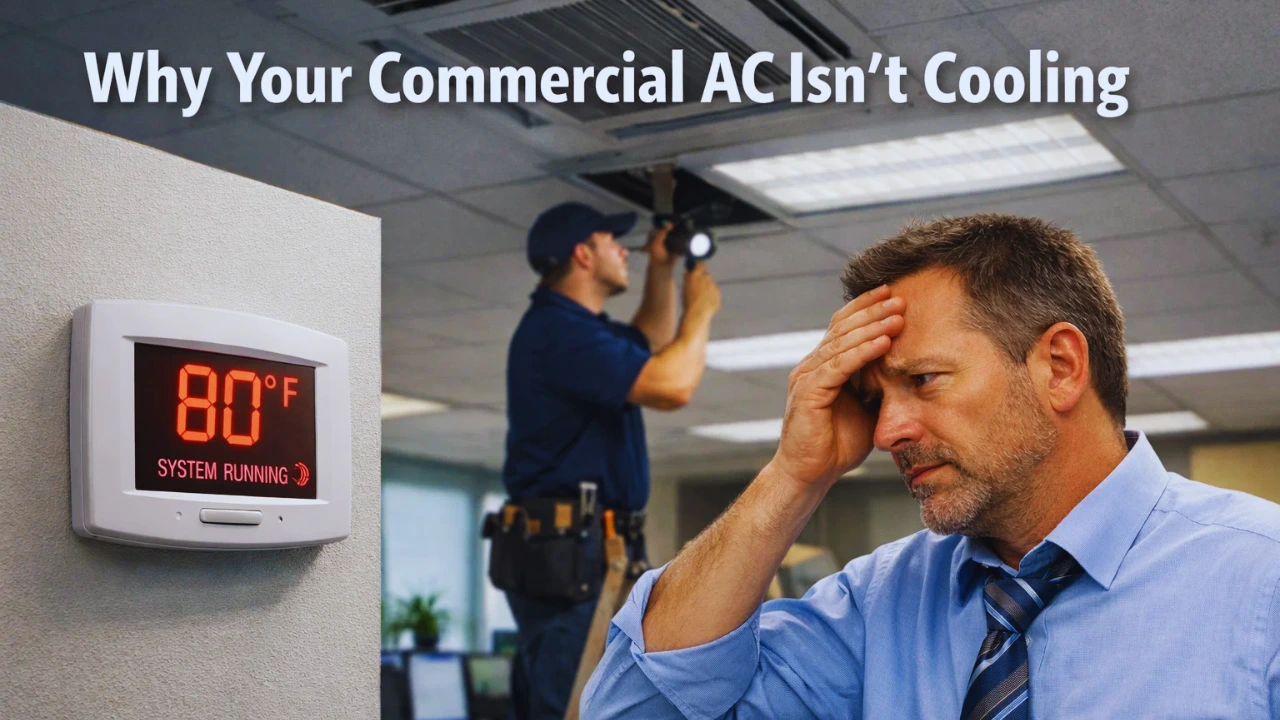
It is so frustrating when a commercial AC runs but fails to cool the building, especially during busy hours. Even though the entire system is on and the fans are working, the air still feels warm. Employees get irritated, and many want to quit. Customers complain, and the work slows down.
Many business owners think the AC is fine because it is running. In fact, this problem shows that something inside the system is not working correctly. Ignoring it can cause higher energy bills and severe damage to the equipment.
Here you will learn why a commercial AC runs but fails to cool. You will also see what causes this problem. Finally, you will understand how professional repair services can fix it before it affects your business.
WHAT IS A COMMERCIAL AC SYSTEM?
A commercial AC system is designed to cool large spaces such as offices, warehouses, restaurants, and retail stores. These systems are stronger than home AC units and work longer under heavy use.
A typical commercial HVAC system has
- Compressor
- Condenser coils
- Thermostat and sensors
- Refrigerant lines
- Ducts and vents
During the hottest summer months, the system works harder to keep the indoor space comfortable. If any part stops working or becomes weak, the AC may run but fail to cool properly. Even minor problems can lead to significant commercial HVAC performance issues if left unaddressed.
COMMON REASONS A COMMERCIAL AC RUNS BUT FAILS TO COOL
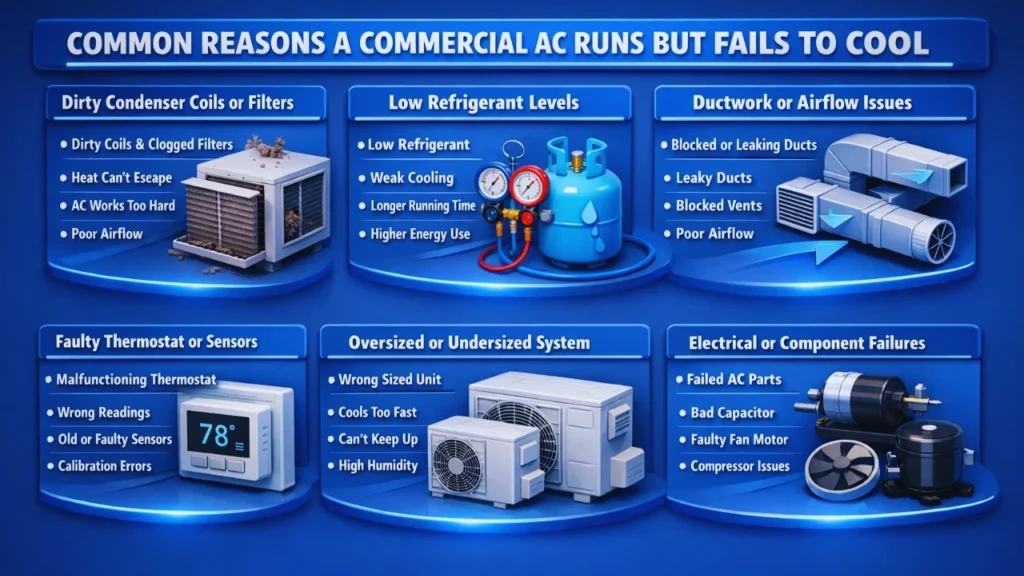
Before looking at each cause, it is important to know that cooling problems usually occur because heat cannot move out properly, airflow is blocked, or parts of the system are not working correctly. The AC may run, but it cannot adequately cool the space.
Below are the most common reasons for this problem, and you need to fix it as fast as possible.
1. Dirty Condenser Coils or Filters
The main reasons for a commercial air conditioner not cooling properly are dirty coils and filters. Dust and debris are blocking the heat and causing the system to work harder.
When coils are dirty
- Heat cannot escape properly
- The AC works too hard
- Indoor air stays warm
Clogged filters also block airflow and reduce cooling efficiency. It makes the AC run continuously without cooling effectively. Regular cleaning is simple but very important for maintaining a commercial AC system.
2. Low Refrigerant Levels
Refrigerant is needed for cooling. If the level drops due to leaks, the AC cannot properly remove heat from inside and move it outside.
Low refrigerant can cause
- Weak cooling
- Longer running time
- Higher energy use
It’s often when the AC is running but not cold that there’s a refrigerant leak. Just refilling the refrigerant is not enough. You need to get the AC checked by Professionals and have the leak found and fixed to prevent further damage.
3. Ductwork or Airflow Issues
Airflow is very important for cooling large commercial spaces. If ducts are blocked, leaking, or damaged, the cool air cannot reach the rooms properly.
Common airflow problems are
- Leaky duct connections
- Blocked vents
- Closed or damaged dampers
These problems cause uneven cooling and reduced airflow. In buildings with rooftop AC, not cooling is often caused by duct problems rather than the unit itself.
4. Faulty Thermostat or Sensors
The thermostat controls when the AC turns on and off and how long it runs. If it gives the wrong temperature reading, the cooling does not work correctly.
This usually happens because of
- Poor sensor placement
- Old or faulty thermostats
- Calibration errors
The system may think the space is already cool and reduce cooling. It makes the building uncomfortable even though the AC is running.
5. Oversized or Undersized System
System size is important for commercial cooling. A unit that is too small cannot handle the heat in an ample space.
An oversized system can
- Cool too quickly
- Turn off too soon
- Fail to remove humidity
Both small and large units can cause poor cooling and higher energy bills. Using the wrong system size often leads to long-term commercial AC troubleshooting.
6. Electrical or Component Failures
Problems with internal components can cause the AC to run but operate less effectively.
Standard parts that fail are
- Capacitors
- Fan motors
- Compressors
When these parts weaken, the AC cannot cool properly. Electrical issues reduce the power, so the system works but does not perform well. If these problems are not fixed early, they usually get worse.
HOW TO FIX THIS ISSUE
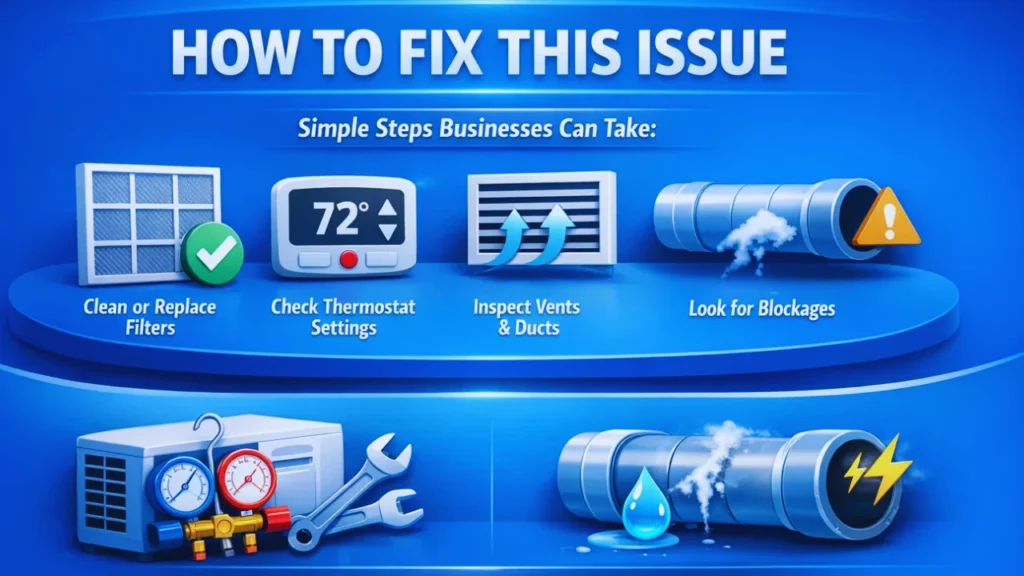
Some basic checks can be done before calling a professional, but most commercial systems require expert inspection.
Simple steps businesses can take:
- Clean or replace air filters
- Ensure thermostat settings are correct
- Check that vents are open and unobstructed
- Look for visible duct blockages
For deeper issues like refrigerant leaks, electrical faults, or compressor problems, professional help is necessary. For persistent problems, it’s best to contact professional Commercial AC Repair Services. Expert technicians can identify the root cause and restore cooling safely and efficiently.
CONCLUSION
When a commercial AC runs but does not cool, it is a common problem for businesses and can cause serious issues. Dirty coils, low refrigerant, poor airflow, and failing parts are often the leading causes. Acting earlier can help avoid downtime, uncomfortable workspaces, and costly repairs. Regular inspections and timely repairs keep the system running well during the hottest times. If your commercial AC runs but fails to cool, contacting trusted Commercial AC Repair Services is the best way to protect your equipment and keep your business comfortable.