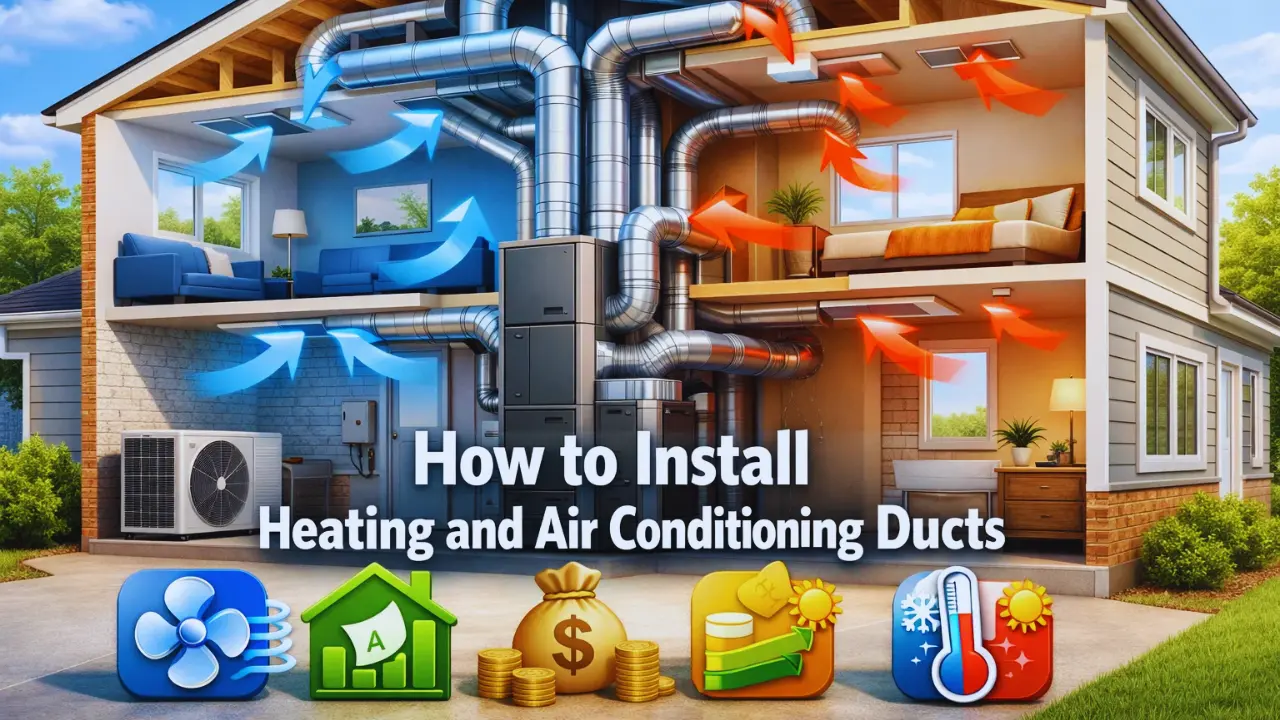
How to Install Heating and Air Conditioning Ducts
Heating and air conditioning ducts play a very important role in any home. These ducts move warm and cool air to every room. Without proper ductwork, even the best air conditioner will not work well. Many homeowners want to know how to install heating and air conditioning ducts, as well as the associated costs. This article provides a comprehensive overview in one place. You will learn how air ducts work, how they are installed, and what factors affect the cost of air duct installation. This guide is written for real people. It explains each step clearly and simply. After reading, you will not need another article. Everything you need to know is described in detail here.
What Are Heating and Air Conditioning Ducts?
Heating and air conditioning ducts are paths that carry air inside a house. These ducts connect the central air system to each room. When air moves through the ducts, it keeps the home comfortable. Ducts are usually made from metal, flexible material, or fiberglass. Metal ducts are strong and durable, lasting a long time. Flexible ducts are easier to install in small spaces. Fiberglass ducts help reduce noise. Each type has a different price. This also affects the cost of installing air conditioning ducts. Good duct design allows air to flow smoothly. Poor duct design causes weak airflow and higher energy bills. That is why learning how to install air ducts correctly is very important for every home.
How to Install Heating and Air Conditioning Ducts
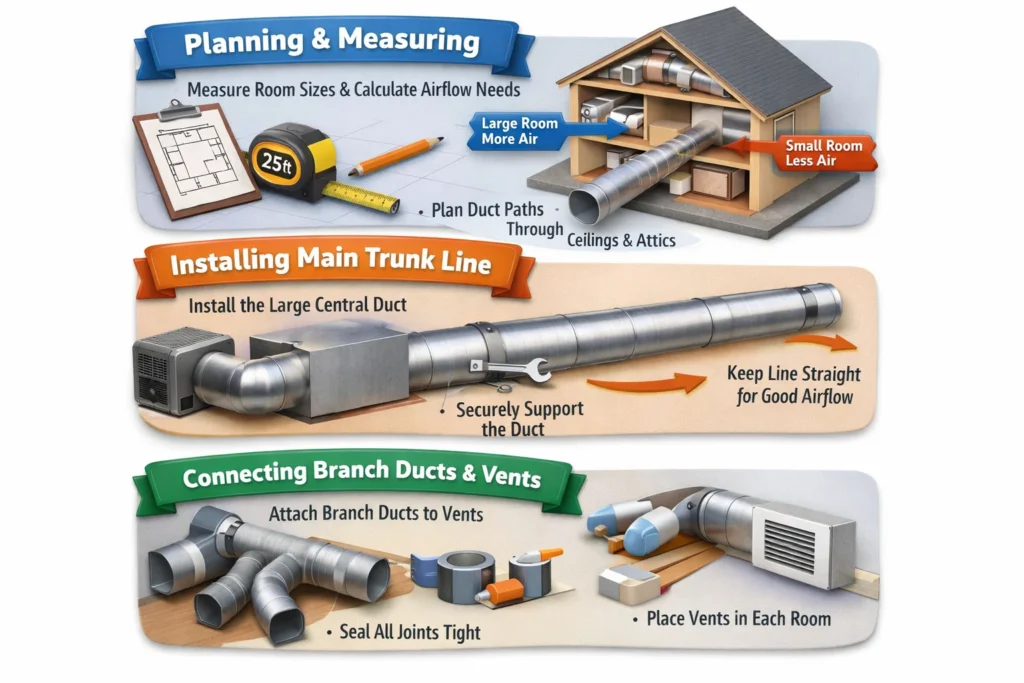
Installing ductwork is not just about placing pipes; it’s about creating a seamless system. It requires planning, measuring, and careful fitting. Before starting, the home layout must be studied. Each room needs the right amount of air. It is called airflow planning. Once planning is done, the installation begins. The main duct line is installed first. This line connects directly to the heating and cooling unit. From there, smaller ducts branch out to each room. These branch ducts carry air to vents. All connections must be tight. Loose joints cause air leaks. Air leaks increase energy waste and cost. After fitting, ducts are sealed using special tape or sealant. Insulation is added to maintain a stable air temperature. This entire process explains how to install heating and air conditioning ducts correctly and safely.
1. Planning and Measuring the Duct Layout
Before any tools are used, careful planning is done. Every room size is measured. Air needs are calculated. Large rooms need more airflow. Small rooms need less. This step helps prevent weak cooling or heating. Duct paths are planned through ceilings, attics, or crawl spaces. Short paths are preferred. Short paths improve airflow. This planning step has a significant impact on the cost of air duct installation. Poor planning leads to extra work later.
2. Installing the Main Trunk Line
The main trunk line is the central duct. It carries air from the HVAC unit. This duct is usually large and strong. It is securely fixed to prevent movement. Proper support is added using straps or hangers. The trunk line must stay straight. Sharp bends reduce airflow. Smooth airflow improves system efficiency. This step is critical when learning how to install air ducts properly.
3. Connecting Branch Ducts and Vents
Branch ducts connect the main line to rooms. These ducts are smaller. They are cut to the correct length. Each branch connects to a vent opening. All joints are sealed tightly. Sealing prevents air loss. Vents are placed where air can spread evenly. Proper vent placement improves comfort. This step completes the physical installation process.
Air Duct Installation Cost: What to Expect
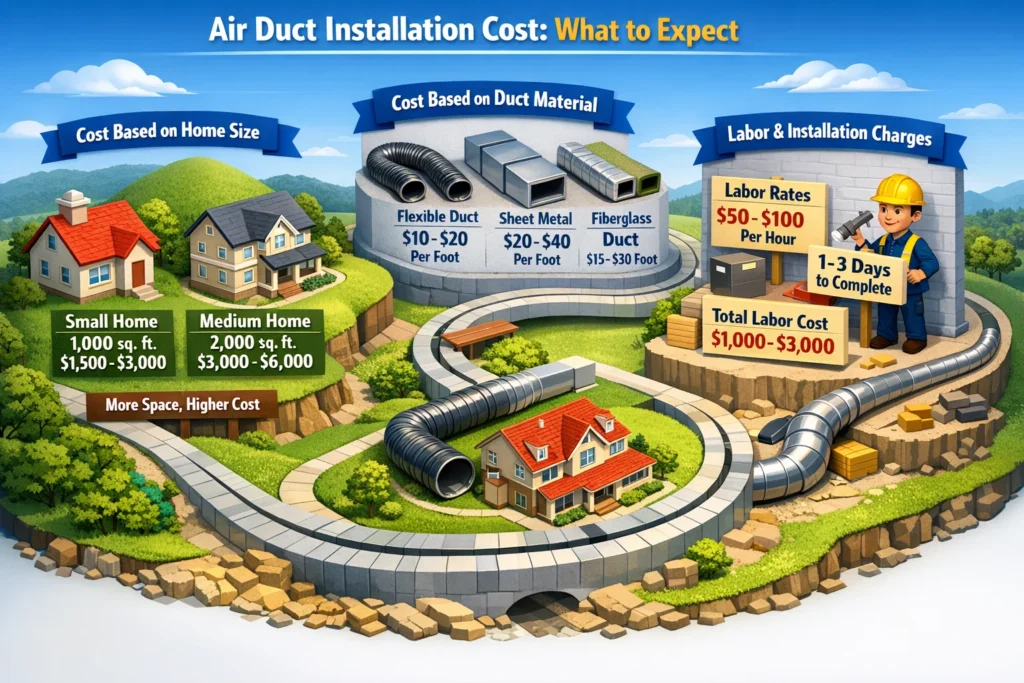
Understanding the cost of air duct installation helps homeowners plan more effectively. The total price depends on the amount of ductwork required and the complexity of the job. Some homes need only minor changes. Others need complete duct installation. Costs also change based on materials and labor time. Below is a clear breakdown to help you understand what you may pay.
1. Cost Based on Home Size
The size of the home plays a significant role in the cost of air conditioning duct installation. Small homes need fewer ducts. Large homes require more materials and labor.
- A small home of approximately 1,000 square feet typically costs between $1,500 and $3,000 for duct installation.
- A medium-sized home, typically around 2,000 square feet, often costs between $3,000 and $6,000.
- Large homes exceeding 3,000 square feet can cost between $6,000 and $10,000 or more.
- More space means more vents and longer ducts.
2. Cost Based on Duct Material
Different duct materials have different prices. Flexible ducts are cheaper. Metal ducts last longer but are more expensive.
- Flexible duct installation typically costs between $10 and $20 per linear foot.
- Sheet metal ducts cost around $20 to $40 per linear foot.
- Fiberglass ducts cost between $15 and $30 per linear foot.
- The material choice directly affects the cost of installing air conditioning ducts.
3. Labor and Installation Charges
Labor cost depends on job difficulty. Easy access areas cost less. Tight spaces cost more.
- Labor charges usually range from $50 to $100 per hour.
- A complete duct installation job can take one to three days.
- This results in labor costs between $1,000 and $3,000 in most homes.
Cost of Air Conditioning Duct Installation by Home Type
Different homes have different duct needs. New homes are easier to work with. Existing homes need more labor. Mobile homes have special duct designs. Multi-story homes need vertical duct runs. These factors change the cost of air conditioning duct installation. Every home is unique. That is why price estimates vary. Always consider layout and access before estimating cost.
How Much Does It Cost to Install Central Air and Ducts?
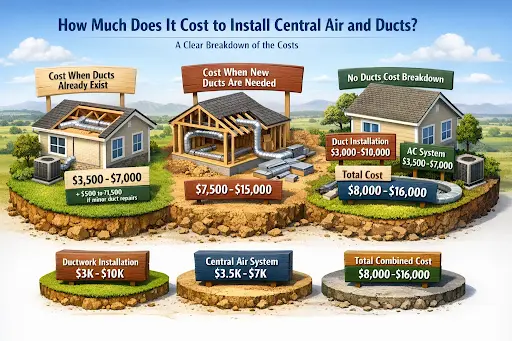
Many homeowners ask how much it costs to install central air and ducts together. The price depends on whether ducts already exist. Installing everything from scratch costs more. Below is a clear and honest explanation of the price.
1. Cost When Ducts Already Exist
If your home already has ductwork, the cost is lower. The installer only connects the system.
- Installing central air with existing ducts typically costs between $3,500 and $7,000.
- This price includes the air conditioning unit, labor, and basic setup.
- If old ducts need minor repairs, add $500 to $1,500.
2. Cost When New Ducts Are Needed
Homes without ducts need complete duct installation. It increases the total cost.
- Installing central air with new ducts typically costs between $7,500 and $15,000.
- It includes the AC system, duct materials, labor, and sealing.
- Larger homes or complex layouts can increase costs.
3. Installing Central Air in a House Without Ducts Cost Breakdown
Installing central air in a house without ducts costs more due to the additional work required.
- Duct installation alone costs $3,000 to $10,000.
- The central air system costs $3,500 to $7,000.
- The total combined cost typically ranges from $8,000 to $16,000.
- It depends on the size of the home and its construction type.
Installing Central Air in a House Without Ducts Cost Factors
Installing central air in a house without ducts costs more for clear reasons. Walls may need cutting. Ceilings may need repair. Duct paths must be created from scratch. Labor time increases. Material use increases. All these raise the installing central air in a house without ducts. However, proper installation improves comfort and home value. Long-term energy savings often balance the higher upfront cost. Homeowners should consider this as a long-term investment.
Factors That Increase or Reduce Installation Cost
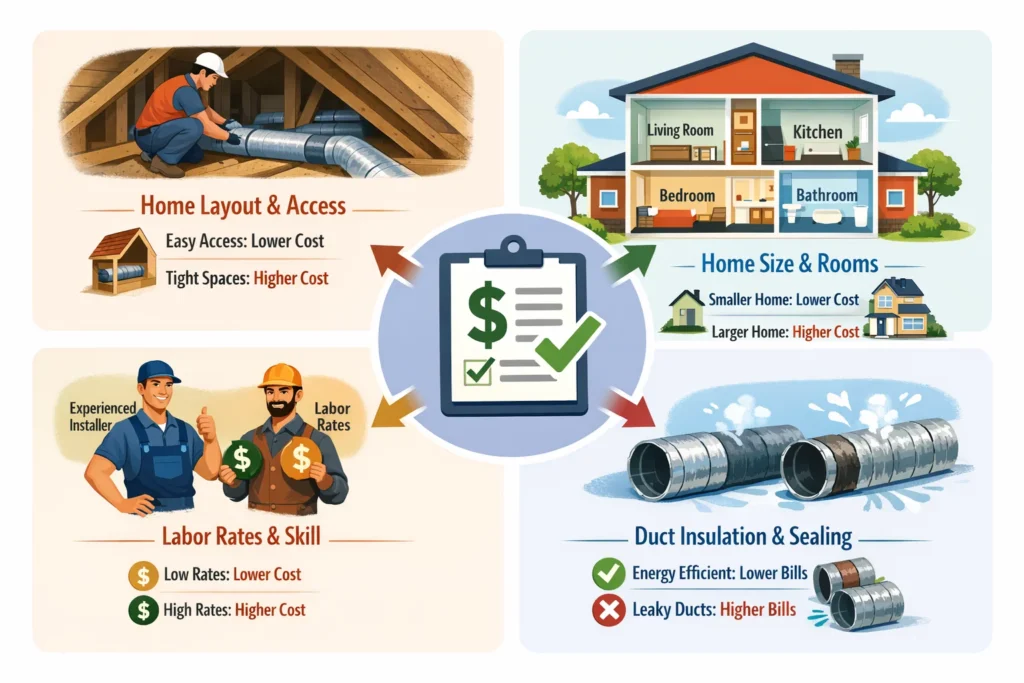
The total price of duct installation does not stay the same for every home. Many small details can significantly impact the final amount. Understanding these details helps homeowners understand why prices change and what factors affect the overall cost.
1. Home Layout and Ease of Access
One important factor is how easy it is to move inside the home during installation. Houses with open attics or crawl spaces allow installers to work faster. When duct paths are easily accessible, the job takes less time and costs less. Homes with tight walls, finished ceilings, or small spaces slow the work. Installers must be more careful in these areas, which increases labor time and raises the total cost of air duct installation.
2. Home Size and Number of Rooms
Another factor that affects the cost is the size of the house and the number of rooms it has. Larger homes need longer ducts and more air vents. Each extra room adds more material and more work. Smaller homes require fewer ducts and are easier to finish. As the size of the home increases, the cost to install air conditioning ducts also increases.
3. Local Labor Rates and Installer Skill
Labor costs also change based on location and worker experience. In areas where labor rates are high, installation prices are also higher. In places with lower labor costs, homeowners often pay less. Skilled installers may charge more, but their experience helps avoid mistakes. Proper installation enhances airflow and reduces future repair needs, ultimately saving money over time.
4. Duct Insulation and Sealing Quality
The quality of duct insulation and sealing also affects cost. Well-sealed and insulated ducts may increase the upfront price slightly. However, they prevent air leaks and keep the air at the right temperature. It improves comfort and lowers energy bills. Poor insulation may initially seem less expensive, but it often results in higher heating and cooling costs over time. Choosing sound insulation usually brings better long-term value.
Can Homeowners Install Air Ducts Themselves?
Some homeowners try DIY installation. Minor repairs are possible. Complete installation is risky. Incorrect sizing causes airflow problems. Poor sealing causes energy loss. Safety risks also exist. Professional air duct installation service providers possess the necessary tools and experience. They follow building codes. For most homes, professional air duct installation is recommended. It ensures proper performance and prolongs the system’s life.
Final Thoughts
Learning how to install heating and air conditioning ducts enables homeowners to make informed decisions. Proper duct installation improves comfort and efficiency. Understanding the cost of air duct installation helps with budgeting. Knowing about options for homes with or without ducts helps avoid confusion. This article explained every step clearly. From planning to sealing, every detail was covered. If you plan carefully and choose skilled installers, your system will work smoothly for years. This guide compiles all the necessary knowledge in one place.