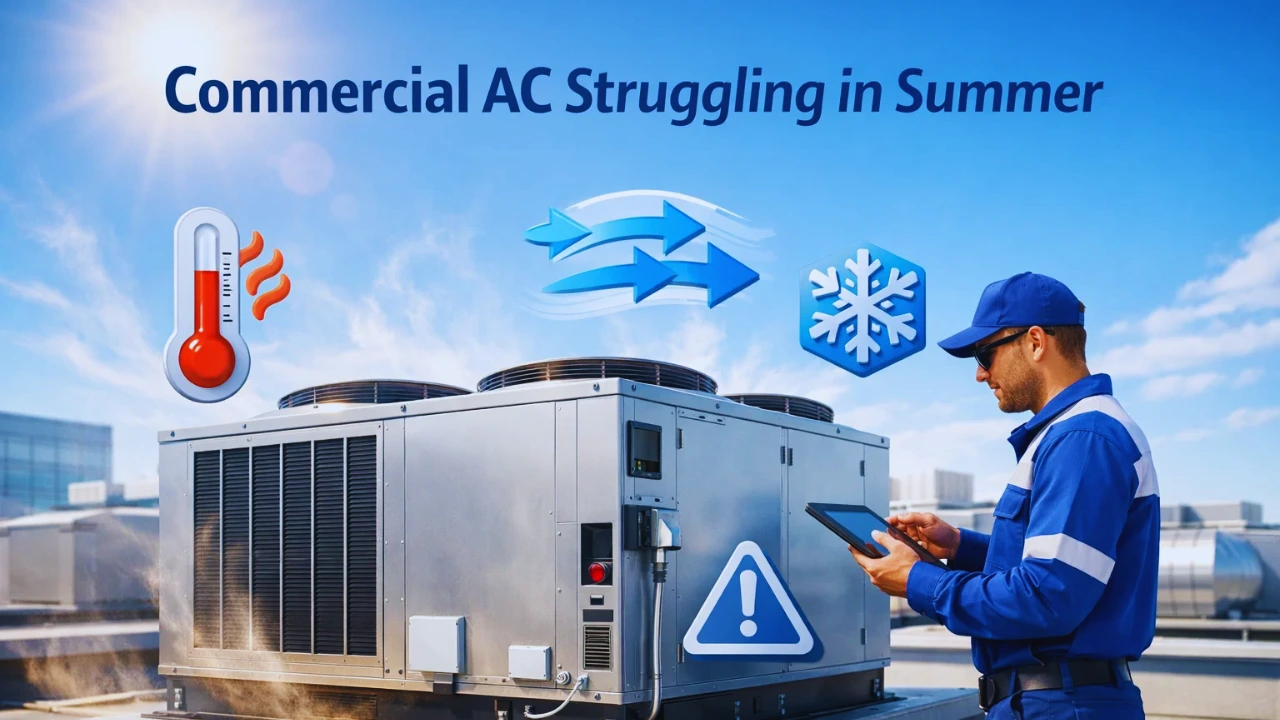
Why Your Commercial AC Struggles During Peak Summer Hours
In this article, you will learn about the challenges of commercial AC systems during summer. You will also learn what signs to watch for. And you will know when it is time to call a professional.
During hot summer days, the temperature rises quickly. Commercial air conditioners are not cooling correctly, and buildings are warming up quickly. Offices, shops, warehouses, and other business places need steady cooling. It keeps people comfortable. It also helps work go smoothly. Many business owners face the same problem every summer. The AC runs, but the rooms do not feel cool. Spaces stay warm. Humidity goes up. It becomes uncomfortable. This makes me work harder. It can also be frustrating.
What Is a Commercial AC System and How Does It Handle Heat?
A commercial AC unit is designed to cool large spaces that get hotter than homes. It takes heat from inside the building and sends it outside. In summer, this becomes harder because the outside air is already very hot. The AC has to work longer and harder to remove the heat. During the hottest hours, every part of the system is under stress. When the system is pushed too far, it cannot cool well. This is when commercial HVAC performance issues appear. These problems are worse if the system is not kept in good condition or is too small for the building.
Step-by-Step Reasons Your Commercial AC Struggles During Peak Summer Hours
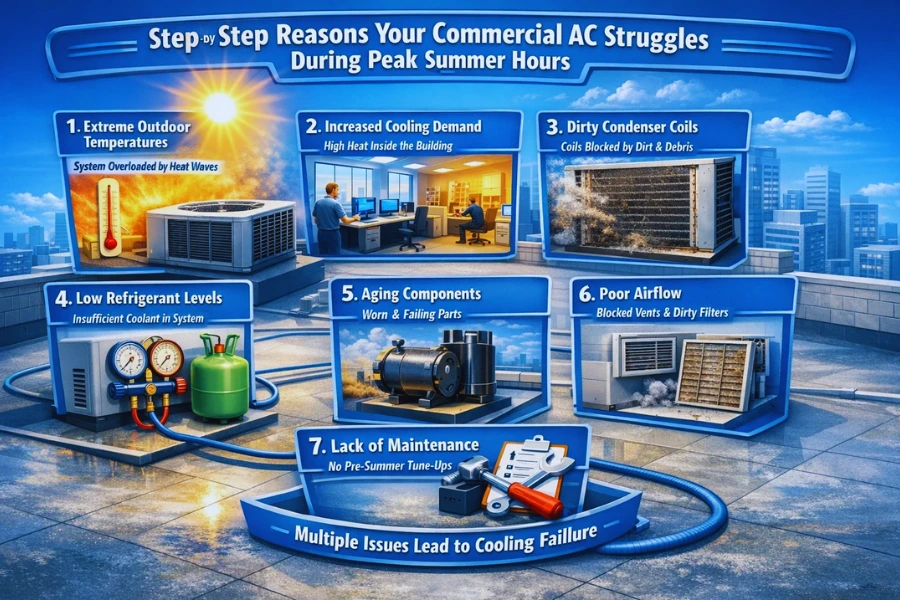
Before looking at each cause, it is important to know one thing. Most cooling problems in summer are not caused by just one failure. They usually occur because of several issues at once. Heat load, airflow, and the condition of the system all affect how well the AC works. Here are the most common reasons businesses have cooling problems during very hot summer conditions.
1. Extreme Outdoor Temperatures Overload the System
Commercial AC units that overheat take heat from inside and push it outside. When the outside air is very hot, this process does not work well. The system runs longer but cools less. This extra work requires more energy and weakens the cooling. Many rooftop units have cooling problems due to heat waves. The system is not broken. It is just working at its limit. This is one of the main reasons commercial AC units fail in summer, especially during the hottest hours of the afternoon.
2. Increased Cooling Demand Inside the Building
Summer heat is not only outside. Inside the building, people, computers, machines, and lights all make heat. Retail stores and warehouses often open their doors many times, letting hot air in. This makes the indoor temperature rise quickly. When the heat inside exceeds the system’s capacity, the AC stops cooling properly. It often happens when businesses grow or add more equipment without upgrading the AC. The system then becomes overloaded and cannot maintain a comfortable environment.
3. Dirty Condenser Coils Reduce Heat Release
Condenser coils push heat into the outdoor air. When the coils are covered with dust, dirt, or debris, the heat cannot escape well. The system overheats, and the cooling system weakens. This is a prevalent reason commercial ACs overheat in summer. Dust builds up faster in hot, dry weather. If the coils are not cleaned regularly, even a powerful system struggles. Dirty coils make the AC work harder. It uses more energy and can cause equipment to wear out faster.
4. Low Refrigerant Levels Underperform in High Heat
Refrigerant is the substance that absorbs heat from inside and transfers it to the outside. When there is not enough refrigerant, the AC cannot remove enough heat from the indoor air. In summer, this problem becomes more visible. The system runs continuously but delivers weak cooling. Small leaks often go unnoticed until peak heat exposes them. Low refrigerant is a key reason commercial ACs aren’t keeping up with the heat. It also causes longer run times and increases the risk of compressor damage if left untreated.
5. Aging or Worn Components Struggle Under Stress
Over time, key components such as compressors, motors, and capacitors wear down. During mild weather, these issues may not show. Extreme summer heat puts extra stress on every component. This is when hidden problems surface. The system may still run, but not at full capacity. Aging equipment is more likely to suffer from business air conditioning problems during heat waves. Summer conditions act like a stress test, revealing weaknesses that were already present.
6. Poor Airflow Inside the Building
Good airflow is very important for the AC to cool well. Clogged filters, blocked vents, or leaks in the ducts stop enough cool air from reaching the rooms. Poor airflow causes some areas to be cooler than others, weakening the cooling. Many commercial HVAC system overload AC problems start with something simple, like a dirty filter. When air cannot move, the system cannot maintain even temperature. It makes the space uncomfortable. Humidity rises, and staff or customers may complain even when the AC is running.
7. Lack of Preventive Maintenance Before Summer
Preventive maintenance prepares the system for peak demand. Without it, even minor problems grow into serious failures. Dirty coils, loose electrical parts, and low refrigerant levels can go unnoticed. By the time summer arrives, the system is already inefficient. This dramatically increases breakdown risk. Regular commercial AC maintenance helps catch issues early and ensures the system enters summer in good condition. Skipping maintenance is one of the biggest reasons cooling problems appear at the worst possible time.
How to Fix Commercial AC Performance Problems in Summer
Fixing summer cooling problems starts with a complete system inspection. A professional technician checks coils, refrigerant levels, airflow, and electrical components. Cleaning condenser coils improves heat release. Refrigerant checks restore cooling balance. Airflow testing ensures even distribution. Electrical testing identifies failing parts before they cause shutdowns. If your system continues to struggle during extreme heat, professional commercial AC repair experts can diagnose and correct the root cause before it turns into a complete breakdown. Early action saves money and prevents lengthy business interruptions.
When Summer AC Struggles Become an Emergency
Some warning signs should never be ignored. If the AC blows warm air, runs continuously, or makes loud noises, it needs service right away. Burning smells, rising indoor humidity, or sudden discomfort are serious problems. When cooling issues start affecting employees, customers, or equipment, it becomes an emergency. Waiting too long can make the system fail. Acting quickly helps protect your business from downtime and restores comfort before more damage happens.
Conclusion
AC cooling problems often occur in commercial buildings, especially when it is very hot. The good news is that most issues can be prevented or resolved early. Understanding why commercial AC struggles during summer helps business owners take action at the right time. Regular maintenance, repairs, and checkups by professionals keep the system working well. Comfortable spaces help employees stay productive and keep customers happy. Acting early keeps your business cool when it matters most.