Does your living room feel comfortable while your bedroom stays warm? Are some areas of your home getting plenty of cool air while other rooms barely receive any airflow?
If so, your air conditioner may not be the only part of the HVAC system worth checking.
Your ductwork plays an important role in distributing conditioned air throughout your property. Even when the AC equipment is operating normally, damaged, disconnected, leaking, or poorly designed ducts can prevent certain rooms from receiving the airflow they need.
This is particularly important for homeowners in South Florida, where air conditioning systems operate for extended periods throughout the year.
Let’s explore common air duct problems, how to recognize them, and when professional HVAC inspection may be necessary.
Why Is Proper Air Ductwork Important?
Your HVAC system relies on a network of supply and return ducts.
Supply ducts carry conditioned air from the air handler to individual rooms. Return ducts transport indoor air back toward the equipment so it can be filtered and conditioned again.
For a system to operate properly, these components must work together.
The duct system needs appropriate sizing, well-sealed connections, suitable insulation where required, and a layout that supports balanced airflow.
If one or more of these elements is not working properly, your home may experience inconsistent temperatures and reduced comfort.
6 Air Duct Problems That Can Cause Uneven Cooling
1. Leaking or Poorly Sealed Duct Connections
Duct connections can loosen or deteriorate over time.
Small openings around joints, fittings, or duct connections may allow conditioned air to escape before it reaches the intended room.
Leaks can be especially concerning when ductwork passes through hot attics or other unconditioned areas.
According to ENERGY STAR, typical forced-air homes may lose approximately 20% to 30% of the air moving through their duct systems because of leaks, holes, and poorly connected ducts. Actual losses vary depending on the building and duct installation.
Signs of possible duct leakage include:
- Rooms that remain uncomfortable.
- Higher-than-expected cooling costs.
- Weak airflow from certain vents.
- Dust accumulation around duct connections.
- Air escaping from visible duct joints.
A professional inspection can help identify where conditioned air is escaping.
2. Crushed or Damaged Flexible Ducts
Flexible ductwork is commonly used in residential HVAC installations.
However, it can become compressed, bent, twisted, or damaged.
When this happens, the available pathway for conditioned air becomes restricted. The affected room may receive less airflow than it needs.
Damaged flexible ducts can also contribute to increased system resistance and inefficient operation.
Accessible duct sections should be inspected for physical damage, sharp bends, disconnected sections, or other visible restrictions.
3. Incorrect Duct Sizing
Duct sizing matters just as much as air conditioner sizing.
If a duct is too small for the airflow it is supposed to carry, the affected room may not receive sufficient conditioned air.
A poorly designed duct layout can also create airflow imbalances between different areas of the house.
This is why installing a larger AC unit does not necessarily solve every uneven cooling problem.
The entire air distribution system should be considered when diagnosing persistent comfort issues.
4. Dirty or Obstructed Air Ducts
Dust and other materials can collect inside ductwork over time.
In some situations, significant debris or an obstruction can interfere with airflow.
However, not every dusty vent means the entire duct system needs cleaning.
Professional inspection should determine whether the problem is accumulated debris, damaged ductwork, a blocked component, or another equipment issue.
It is also important to understand the difference between air duct cleaning and duct repair.
Cleaning addresses appropriate contamination inside ductwork. Repair addresses structural problems such as leaks, disconnected joints, and damaged duct sections.
One service cannot automatically replace the other.
5. Poorly Located or Blocked Air Vents
Sometimes uneven cooling has a simple explanation.
Furniture, curtains, rugs, or storage items may block supply vents and return air grilles.
This prevents air from moving freely through the room.
Start by checking whether your vents and return grilles are clear.
Make sure supply registers are open unless your HVAC professional has advised otherwise.
Avoid closing large numbers of vents throughout your home in an attempt to redirect air. This can interfere with the system’s intended airflow and increase operating pressure.
6. Return Airflow Problems
Supply airflow is only one side of the equation.
Your air conditioning system also needs a proper return-air pathway.
When return grilles are blocked or the return duct system is restricted, the HVAC equipment may struggle to circulate air as intended.
Some homes have rooms with closed doors and limited return-air pathways, which can contribute to pressure differences and uneven comfort.
A professional can evaluate return-air design, room pressures, and overall system performance.
How to Recognize an Air Duct Problem
You do not need specialized equipment to notice that something may be wrong.
Pay attention to these common signs:
- One bedroom is consistently warmer than the rest of the house.
- Airflow from certain vents is noticeably weaker.
- Some rooms take much longer to cool.
- You hear unusual whistling around duct connections.
- Cooling feels inconsistent despite normal thermostat settings.
- Your cooling costs increase without an obvious change in usage.
- Visible duct sections appear damaged, loose, or disconnected.
These symptoms do not automatically prove that your ducts are responsible. Problems with filters, blower motors, evaporator coils, thermostats, or other HVAC components can produce similar symptoms.
The goal is to identify the actual cause before spending money on unnecessary repairs.
What Should You Check Before Calling an HVAC Technician?
A few basic checks can help you narrow down the issue.
1. Inspect your air filter: A dirty filter can restrict airflow and affect cooling performance.
2. Check your vents: Remove furniture and objects blocking supply and return grilles.
3. Compare room temperatures: Notice whether the same rooms remain uncomfortable throughout the day.
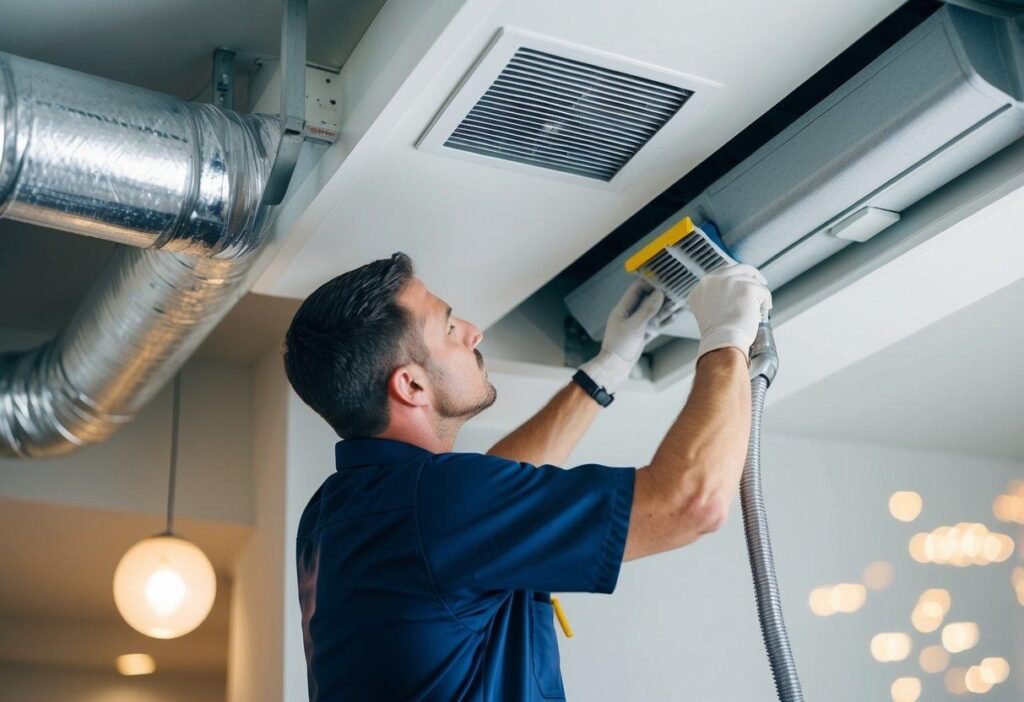
4. Look at accessible ductwork: Check for visible disconnections, crushing, or obvious damage without opening ceilings or entering unsafe spaces.
5. Review thermostat settings: Make sure your system is set to the correct cooling mode and the temperature is appropriate.
If these checks do not resolve the problem, professional diagnosis is the next step.
How Does a Professional HVAC Duct Inspection Work?
A proper inspection should look beyond the air conditioner itself.
Depending on the system and reported symptoms, an HVAC professional may:
- Inspect accessible duct sections and connections.
- Look for visible leakage or physical damage.
- Evaluate airflow at individual registers.
- Check return-air pathways.
- Inspect the air filter and accessible HVAC components.
- Measure operating conditions and system pressure where appropriate.
- Review duct sizing and air distribution.
- Recommend cleaning, sealing, repairs, or design corrections based on the findings.
The correct solution depends on what the inspection reveals.
For example, replacing a damaged flexible duct section is different from cleaning debris inside an otherwise intact duct system.
Why Air Duct Problems Matter in South Florida
Miami-Dade and Broward County homes experience long cooling seasons and high outdoor humidity.
Ductwork located in hot or humid spaces needs appropriate design, sealing, and insulation to help protect the performance of the air distribution system.
Poorly maintained ducts can contribute to inconsistent room temperatures, reduced comfort, and unnecessary energy loss.
Addressing problems early can help your existing HVAC system deliver conditioned air more effectively.
Frequently Asked Questions
Can leaking air ducts increase electricity bills?
Yes. Leaking ducts can allow conditioned air to escape before reaching the rooms where it is needed. This can cause longer cooling cycles and unnecessary energy use.
How do I know whether my air ducts need cleaning or repair?
Cleaning may be appropriate when an inspection identifies significant accumulated debris or contamination. Repair is necessary when ductwork has physical damage, loose connections, leaks, or disconnected sections.
Why is one bedroom hotter than the rest of my house?
Possible causes include restricted airflow, duct leakage, incorrect duct sizing, blocked vents, return-air problems, insulation issues, or equipment performance faults.
Can dirty air filters cause uneven cooling?
Yes. A severely restricted air filter can interfere with airflow and reduce cooling performance throughout the system.
Should I replace my air conditioner because some rooms are not cooling?
Not necessarily. Ductwork and air distribution problems should be evaluated before deciding that the entire AC system needs replacement.
Get Professional HVAC Help From Central Air Comfort
Uneven cooling can make your home uncomfortable, especially during the hot and humid months in South Florida.
Instead of continually adjusting your thermostat, consider having the entire cooling and air distribution system evaluated.
Central Air Comfort provides HVAC services for residential and commercial properties throughout Miami-Dade and Broward County. Our services include air conditioning repair, installation, maintenance, and air duct cleaning.
Whether you are located in Hialeah Gardens, Miami, Doral, Miami Gardens, Hollywood, or Pembroke Pines, our team can help you understand your HVAC concerns and discuss appropriate service options.
Call Central Air Comfort at (305) 826-1354 to discuss your airflow and ductwork concerns.