Your air conditioning system does more than keep your home cool. It also helps circulate and filter indoor air throughout your living spaces.
In South Florida, where air conditioners operate for much of the year, choosing and maintaining the right HVAC air filter is an important part of caring for your cooling system.
Dust, pollen, pet dander, and other airborne particles can enter your home through everyday activities. Without an appropriate filtration system, some of these particles may continue circulating through your indoor environment.
However, selecting an air filter is not simply about buying the thickest or highest-rated option available.
The correct filter needs to match your HVAC equipment while providing the filtration level your household needs.
In this guide, we explain how HVAC air filters work, what MERV ratings mean, how often to replace filters, and when additional air purification may be worth considering.
What Does an HVAC Air Filter Actually Do?
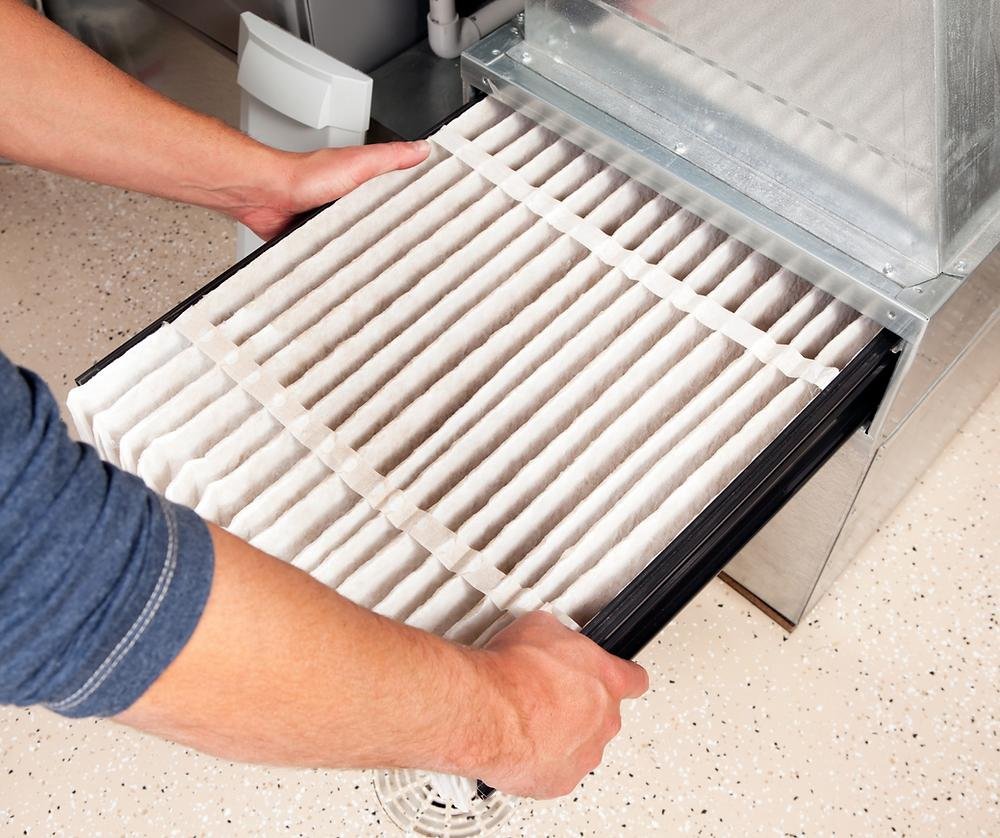
An HVAC air filter captures airborne particles as air passes through the heating and cooling system.
Depending on its design and efficiency, an air filter may capture particles such as:
- Household dust.
- Pollen.
- Pet dander.
- Certain mold spores.
- Other airborne particulate matter.
Filtering particles can help reduce the amount of airborne debris entering sensitive HVAC components.
However, an ordinary HVAC filter does not remove every indoor pollutant.
For example, standard particle filters are not necessarily designed to remove gases, chemical odors, or every type of indoor contaminant.
Improving indoor air quality often requires several complementary approaches, including source control, appropriate ventilation, and suitable filtration.
What Is a MERV Rating?
MERV stands for Minimum Efficiency Reporting Value.
It is a rating system used to compare the ability of HVAC air filters to capture airborne particles under standardized testing conditions.
In general, a higher MERV rating indicates greater particle filtration efficiency.
However, that does not mean every home should automatically use the highest-rated filter available.
A filter that is too restrictive for your HVAC equipment may interfere with airflow and system performance.
Understanding Different MERV Ratings
Here is a general explanation of common filter rating categories:
MERV 1–4: Basic filtration, primarily capturing larger particles. These filters are often used for basic equipment protection.
MERV 5–8: Provide improved filtration for larger airborne particles, including some household dust and pollen.
MERV 9–12: Offer greater filtration efficiency for smaller airborne particles compared with lower-rated filters.
MERV 13 and higher: Designed to capture a greater proportion of smaller airborne particles under standardized testing conditions. These filters require particular attention to equipment compatibility.
The appropriate rating depends on your air conditioner, filter slot, blower capacity, and household requirements.
The EPA recommends MERV 13 or the highest-efficiency filter that your particular system can accommodate. A qualified HVAC professional can help verify compatibility before you upgrade.
Why Choosing the Wrong Air Filter Can Cause Problems
A higher-rated filter may sound like an easy way to improve indoor air quality, but choosing one without considering your equipment can create problems.
Potential issues include:
1. Restricted Airflow
Some high-efficiency filters create more resistance to airflow than basic filters.
If your HVAC system cannot handle that resistance, airflow may decrease.
This can affect cooling performance and put additional demands on the equipment.
2. Reduced Cooling Performance
Your air conditioner relies on proper airflow to transfer heat effectively.
An unsuitable or excessively restrictive filter can interfere with normal operation.
This is why choosing a filter based only on its MERV rating is not recommended.
3. Incorrect Filter Dimensions
Even an efficient filter will not work as intended if it does not fit properly.
An improperly sized filter may allow air to bypass the filtration material.
Always verify the dimensions specified for your equipment before purchasing a replacement.
How Often Should You Replace Your HVAC Air Filter?
There is no single replacement schedule that works for every home.
The correct interval depends on the filter type, household conditions, air conditioning usage, and manufacturer’s recommendations.
You may need to inspect your filter more frequently if you have:
- Pets that shed regularly.
- Several occupants.
- Nearby construction or significant outdoor dust.
- Frequent air conditioning operation.
- A household environment with increased airborne particles.
A simple way to maintain your system is to inspect the filter regularly and replace it when required by its condition and manufacturer guidance.
Do not wait until the filter becomes visibly overloaded.
Also, remember that disposable filters should not be washed and reused unless the manufacturer specifically permits it. Reusable filters must be cleaned according to their instructions.
Does a HEPA Filter Work With a Central Air Conditioning System?
HEPA filters are designed for high-efficiency particle filtration and are commonly used in portable air cleaners.
However, a standard residential central AC system may not be designed to accommodate a conventional HEPA filter directly.
HEPA filtration often requires equipment specifically designed to handle its airflow resistance.
For many homeowners, a compatible HVAC filter combined with a properly selected portable air cleaner may be a more practical approach.
The important point is to select filtration equipment based on the space, system design, and actual indoor air quality needs.
Should You Install an Air Purifier in Your Home?
An additional air purification system may be worth considering when normal HVAC filtration does not address your household’s specific needs.
Different technologies target different types of pollutants.
For example:
Mechanical particle filtration: Captures airborne particles such as dust, pollen, and other particulate matter.
HEPA filtration: Provides high-efficiency particle filtration in appropriately designed equipment.
Activated carbon filtration: Can help reduce certain gases and odors when the system contains sufficient suitable carbon material.
Whole-home filtration: Can provide filtration through a central HVAC system, provided the equipment and installation are compatible.
According to the U.S. EPA, filtration works best as a supplement to controlling pollution sources and providing appropriate ventilation.
No air purifier or filter can eliminate all indoor pollutants.
It is also important to avoid air-cleaning products that intentionally produce ozone, which is a lung irritant.
Why Indoor Air Filtration Matters in South Florida
Homes throughout Miami-Dade and Broward County experience a variety of indoor and outdoor environmental conditions.
Dust, outdoor pollen, household activities, pets, and moisture-related problems can all affect indoor air quality.
An appropriately selected filtration system can help capture certain airborne particles before they circulate through your HVAC system.
However, filtration should not be confused with moisture control.
If your home has a water leak, persistent condensation, or visible mold, addressing the source of moisture is essential. Replacing a filter or installing an air purifier will not correct the underlying water problem.
A proper HVAC assessment can help determine whether your home needs a different filter, additional filtration, or attention to another part of the system.
6 Tips for Maintaining Your HVAC Air Filtration System
Here are practical ways to get the most out of your filtration system:
1. Check your filter regularly: Inspect it rather than relying on a fixed replacement date alone.
2. Use the correct size: Make sure the replacement matches your equipment specifications.
3. Follow the airflow direction: Install directional filters according to the airflow arrow printed on the frame.
4. Avoid incompatible high-MERV filters: Ask an HVAC professional before upgrading to a significantly higher rating.
5. Keep the surrounding equipment clean: Dust and debris around the air handler should be addressed during appropriate system maintenance.
6. Investigate persistent indoor air quality issues: Unusual odors, excessive dust, recurring moisture, or other problems may have causes that a filter alone cannot resolve.
Frequently Asked Questions
What is the best HVAC air filter for a South Florida home?
The best filter is one that provides suitable particle filtration while remaining compatible with your HVAC system. Filter dimensions, MERV rating, airflow requirements, and manufacturer recommendations should all be considered.
Is MERV 13 always better than MERV 8?
MERV 13 provides greater particle filtration efficiency under standardized testing conditions, but it is not automatically the right choice for every HVAC system. Always confirm that your equipment can accommodate the filter.
Can an air filter reduce household dust?
Yes. HVAC filters can capture some airborne dust particles as air passes through them. However, they cannot remove dust that has already settled on floors, furniture, and other surfaces.
Can an HVAC filter remove bad odors?
Ordinary particle filters are not designed to remove all gases and odors. Activated carbon filtration or other suitable air-cleaning technologies may help with certain gaseous pollutants.
Can an air purifier prevent mold growth?
No. Air purifiers may capture some airborne particles, but preventing mold growth requires controlling moisture and addressing the source of dampness.
How do I know when my AC filter needs replacement?
Check the filter’s condition and follow the manufacturer’s replacement recommendations. Increased dust buildup, visible contamination, or a filter that has become overloaded may indicate that replacement is necessary.
Improve Your Indoor Air Quality With Central Air Comfort
Choosing the right air filter is an important step toward maintaining your HVAC system and improving indoor comfort.
However, the best results come from selecting filtration equipment that works with your existing air conditioning system.
Central Air Comfort provides residential and commercial HVAC services throughout Miami-Dade and Broward County, including air conditioning maintenance, repair, installation, and air purifier and filtration solutions.
Whether you live in Hialeah, Miami, Doral, Miami Beach, Hollywood, or Pembroke Pines, our team can help you explore appropriate HVAC and indoor air quality solutions.