An air conditioner is one of the most important appliances in a South Florida home. With high temperatures, humidity, and long cooling seasons, homeowners depend on their AC systems to maintain a comfortable indoor environment throughout much of the year. However, as an air conditioner gets older, keeping it running can become increasingly expensive and frustrating.
One of the biggest questions homeowners face is whether they should continue paying for repairs or invest in a new air conditioning system. While some AC problems can be fixed with a simple repair, recurring breakdowns, declining efficiency, and aging components may indicate that replacement is the better long-term decision.
If you live in Hialeah, Hialeah Gardens, or another South Florida community, understanding the warning signs can help you make a more informed decision before your system stops working completely.
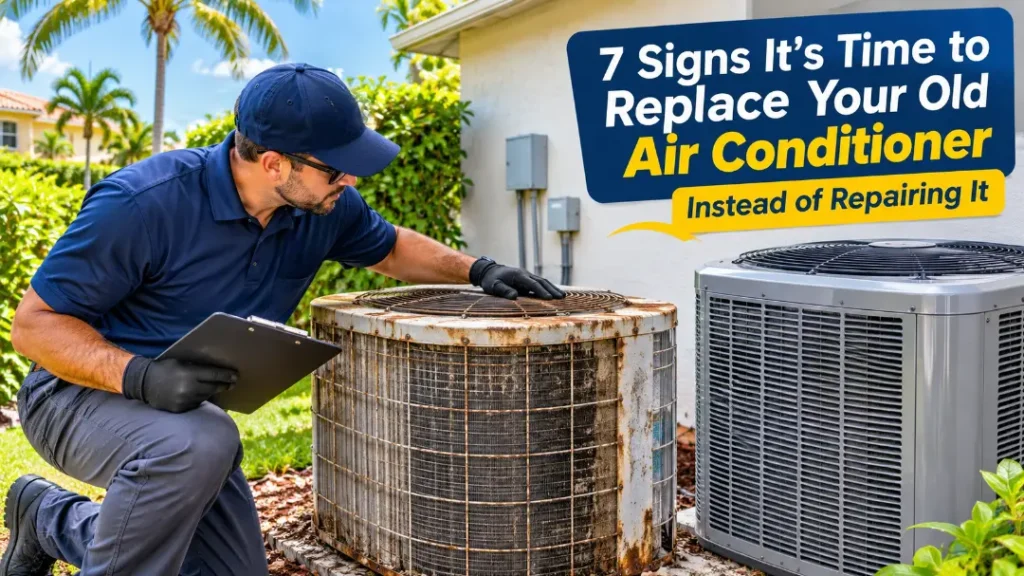
In this guide, we will explain seven signs that it may be time to replace your old air conditioner instead of repairing it, what to consider before buying a new system, and how professional HVAC services can help you choose the right solution for your home.
1. Your Air Conditioner Is More Than 10–15 Years Old
The age of your air conditioner is one of the first things to consider when deciding whether to repair or replace it. Most residential central air conditioning systems have an expected lifespan of approximately 10 to 15 years, although some units may operate longer with proper installation and regular maintenance.
However, an older AC system may not deliver the same performance or energy efficiency it once did. Years of continuous operation can gradually wear down important components, including the compressor, condenser fan motor, evaporator coil, and electrical connections.
In South Florida, air conditioners often work harder than systems in cooler climates because homeowners depend on cooling for much of the year. This extended operating time can contribute to equipment wear and increase the likelihood of repairs.
How Long Does an Air Conditioner Usually Last in Florida?
The lifespan of an air conditioner depends on several factors, including equipment quality, installation workmanship, maintenance history, and operating conditions.
Florida’s hot weather and high humidity place additional demands on residential cooling systems. An air conditioner that operates for long periods throughout the year may experience more wear than a system used only during a short summer season.
Regular maintenance, clean filters, properly functioning drainage, and good airflow can help extend equipment life. However, maintenance cannot prevent every mechanical failure or restore an aging system to its original condition.
Should You Replace a 15-Year-Old Air Conditioner?
Not necessarily. An older air conditioner that cools properly, receives regular maintenance, and requires very few repairs may still be worth keeping.
However, replacement deserves consideration if your 15-year-old system frequently breaks down, struggles to maintain comfortable temperatures, or requires expensive component repairs.
Instead of making the decision based only on age, consider the system’s overall condition, repair history, energy consumption, and expected remaining service life.
If your equipment is approaching the end of its useful lifespan, exploring professional AC replacement services can help you understand your available options.
2. Your AC Requires Frequent and Expensive Repairs
Occasional air conditioner repairs are normal. Even a relatively new cooling system can experience problems with electrical components, motors, thermostats, or refrigerant lines.
However, repeated breakdowns can indicate that an older HVAC system is experiencing more serious wear.
For example, you might repair a capacitor one month, experience a blower motor problem a few months later, and then discover a refrigerant leak. Although each repair may temporarily restore cooling, the total expenses can become difficult to justify.
When Do AC Repair Costs Become Too Expensive?
The best way to evaluate repair expenses is to compare the cost of the proposed repair with the overall condition and expected remaining lifespan of your air conditioner.
Consider the following questions:
- How much have you spent on AC repairs during the past two or three years?
- Is the current problem isolated, or are multiple components showing signs of failure?
- Is the system still operating efficiently?
- Are additional expensive repairs likely in the near future?
- How much would a new air conditioning system cost compared with continued repairs?
For example, replacing a relatively inexpensive capacitor in an otherwise healthy air conditioner may be a sensible decision. However, investing heavily in a major compressor repair on an aging system that has experienced several other failures deserves a closer evaluation.
Common Air Conditioner Components That Can Fail
Several important components can develop problems as an air conditioning system ages.
Compressor: The compressor circulates refrigerant through the cooling system. A major compressor failure can be expensive to repair, particularly on older equipment.
Condenser fan motor: This motor helps move outdoor air across the condenser coil to release heat. A failing motor can affect system operation and cause overheating.
Evaporator coil: The evaporator coil absorbs heat from indoor air. Coil problems, corrosion, or refrigerant leaks can reduce cooling performance.
Blower motor: The blower motor circulates conditioned air through the ductwork and into different rooms.
Capacitor: Capacitors help start and operate certain AC motors. They can fail and prevent the system from operating correctly.
Not every component failure means you need a new air conditioner. A qualified technician should diagnose the actual problem and explain whether repair or replacement makes more sense.
If your system is experiencing repeated problems, consider scheduling professional AC repair services before another breakdown causes additional inconvenience.
3. Your Electricity Bills Keep Increasing Despite Normal Usage
An unexpected increase in your monthly electricity bill can be another indication that your air conditioner is losing efficiency.
As cooling equipment ages, worn components and declining performance can make it harder for the system to maintain the desired indoor temperature. The air conditioner may need to operate longer or work harder to provide the same level of comfort.
In South Florida, where air conditioning is used for much of the year, even a gradual decline in efficiency can affect household energy expenses.
How Does an Old AC Unit Affect Your Monthly Energy Bills?
Several issues can contribute to increased energy consumption:
- Aging mechanical components that no longer operate efficiently.
- Dirty evaporator and condenser coils that interfere with heat transfer.
- Refrigerant problems that affect cooling performance.
- Restricted airflow caused by clogged filters or ductwork issues.
- Incorrect equipment sizing or installation problems.
- Electrical or thermostat issues that affect system operation.
It is important to remember that rising electricity bills do not automatically mean your air conditioner needs replacement. Changes in weather, utility rates, thermostat settings, insulation, and household usage can also influence energy consumption.
A professional HVAC inspection can help identify whether the air conditioner is responsible for the increased energy use.
Can a New Air Conditioner Lower Electricity Costs?
Replacing an outdated air conditioner with a properly sized, energy-efficient model may reduce electricity consumption.
Modern systems are designed with improved efficiency features, including better compressor technology, more advanced controls, and higher SEER2 efficiency ratings.
SEER2 stands for Seasonal Energy Efficiency Ratio 2. It measures an air conditioner’s cooling efficiency under updated testing conditions. Generally, a higher SEER2 rating indicates greater cooling efficiency.
However, choosing a high-efficiency system alone does not guarantee a specific reduction in your electricity bill. Proper equipment sizing, professional installation, ductwork condition, and regular maintenance all influence actual performance.
If your old system consumes more energy than expected, exploring professional AC installation can help you compare modern cooling options.
4. Your Air Conditioner No Longer Cools Your Home Properly
An air conditioner should maintain comfortable indoor temperatures when it is operating correctly and is appropriately sized for the property.
If your system runs continuously but struggles to cool your home, its performance may be declining. You might notice that certain rooms remain warm, the thermostat setting is difficult to reach, or the AC takes much longer than usual to cool the house.
These problems can be especially uncomfortable during the hottest months in South Florida.
Why Does an Old Air Conditioner Struggle to Cool Your Home?
Several mechanical and airflow problems can affect cooling performance.
Compressor deterioration: A damaged or failing compressor may prevent the system from circulating refrigerant properly.
Refrigerant leaks: Low refrigerant levels caused by leaks can reduce the system’s ability to transfer heat effectively.
Dirty coils: Dirt and debris on the evaporator or condenser coils can interfere with the cooling process.
Restricted airflow: Dirty filters, blocked vents, damaged ductwork, or blower motor problems can reduce the amount of conditioned air reaching your rooms.
Incorrect system sizing: An undersized system may struggle to cool the property, while an oversized system may turn on and off too frequently.
Can AC Repair Restore an Older Air Conditioner?
Yes. Some cooling problems can be resolved without replacing the entire system.
For example, cleaning a dirty coil, correcting a refrigerant leak, replacing a faulty capacitor, or repairing a blower motor may restore normal operation.
However, if an older air conditioner has several failing components or continues to experience cooling problems after repeated repairs, replacing the system may provide better long-term value.
Before purchasing new equipment, have an HVAC professional inspect the entire cooling system. This helps determine whether the problem comes from the air conditioner itself, the ductwork, or another part of the HVAC system.
5. Your Air Conditioner Uses an Outdated Refrigerant
Refrigerant plays an important role in the air conditioning process. It circulates between the indoor and outdoor components, absorbing heat from indoor air and releasing it outside.
Older air conditioners may use refrigerants that are no longer commonly used in newly manufactured equipment. One well-known example is R-22, also called Freon.
The United States phased out the production and import of virgin R-22 refrigerant in 2020 because of its environmental impact. However, existing systems are not automatically prohibited from operating. Reclaimed or previously produced R-22 may still be available for servicing older equipment.
What Happens When an Older AC Uses R-22 Refrigerant?
If an older air conditioner develops an R-22 refrigerant leak, repairing it may become more expensive or difficult because the refrigerant is less readily available than modern alternatives.
The system may also have other age-related problems that make continued investment less attractive.
It is important to understand that refrigerant does not normally get consumed during regular AC operation. If your system repeatedly needs refrigerant, a leak or another problem should be investigated.
Is It Better to Replace an Old R-22 Air Conditioner?
Replacement may be worth considering if your R-22 air conditioner is aging, requires repeated refrigerant-related repairs, or has other major mechanical problems.
A new system may offer improved efficiency, updated technology, and access to currently supported refrigerants.
However, the decision should also consider the condition of the existing equipment, repair expenses, and the cost of installing a replacement system.
An HVAC professional can inspect your current equipment and explain whether repairing it or investing in a newer air conditioner is the more practical option.
6. Your Air Conditioner Makes Unusual Noises or Has Persistent Odors
Air conditioners produce some operating noise, but sudden or unusual sounds should not be ignored.
As mechanical components wear down, an aging cooling system may start producing grinding, rattling, buzzing, or screeching sounds. Persistent odors can also indicate problems that require professional attention.
Although these symptoms do not automatically mean you need a new air conditioner, they may indicate developing mechanical or electrical problems.
What AC Noises Can Indicate a Serious Problem?
Different sounds can point toward different equipment issues.
Grinding sounds: These may indicate worn bearings or problems involving a motor or other moving component.
Rattling sounds: Loose panels, mounting hardware, debris, or deteriorating internal components can produce rattling noises.
Screeching sounds: High-pitched sounds may be associated with motor or belt-related problems, depending on the equipment design.
Banging sounds: Repeated banging can indicate loose or damaged mechanical components.
Buzzing sounds: Electrical problems, failing capacitors, or loose connections may produce buzzing sounds.
If you notice burning smells, smoke, or signs of overheating, turn off the system if it is safe to do so and contact a qualified HVAC technician. Do not attempt to inspect electrical components yourself.
What About Unpleasant AC Odors?
Persistent odors may come from several sources, including:
- Moisture accumulating around the evaporator coil.
- Clogged condensate drain lines.
- Damp insulation or ductwork.
- Dirty filters.
- Electrical overheating.
A musty smell may indicate moisture-related issues, while a burning smell may suggest an electrical problem.
The source of the odor should be identified before deciding whether the air conditioner needs repair or replacement.
7. Your AC Uses Outdated Technology and No Longer Meets Your Home’s Needs
Air conditioning technology has improved significantly over the years. Older systems may lack many of the efficiency, temperature-control, and comfort features available in newer equipment.
If your existing air conditioner struggles to maintain consistent temperatures, operates inefficiently, or no longer suits your household’s cooling needs, upgrading may be worth considering.
What Features Should You Look for in a New Air Conditioner?
When shopping for a replacement air conditioning system, consider the following features.
Higher SEER2 efficiency ratings: Energy-efficient systems can help reduce electricity consumption when properly selected and installed.
Variable-speed compressors: These systems can adjust their cooling output based on demand, helping maintain more consistent indoor temperatures.
Improved humidity management: Certain modern systems offer advanced controls that can help manage indoor humidity when correctly sized and configured.
Smart thermostat compatibility: Compatible smart thermostats can provide better scheduling, temperature adjustments, and system monitoring.
Modern filtration compatibility: Depending on the equipment and filtration setup, newer systems can support improved indoor air filtration.
The best features for your home depend on your cooling requirements, budget, and existing HVAC setup.
How Does Professional AC Installation Improve System Performance?
Choosing the right equipment is only part of a successful AC replacement. Installation quality also plays a major role in system performance, efficiency, and reliability.
A professional installation should consider:
- Manual J load calculations to determine the home’s cooling requirements.
- Proper equipment sizing based on the property’s layout, insulation, windows, and other factors.
- Inspection of existing ductwork and airflow.
- Refrigerant line and electrical compatibility.
- Proper refrigerant charging according to manufacturer specifications.
- System testing and commissioning after installation.
Installing an air conditioner that is too large or too small for the property can create comfort and efficiency problems.
For example, an oversized system may cool the home quickly but shut off before running long enough to remove sufficient moisture from the indoor air. An undersized system may struggle to maintain the desired temperature during periods of extreme heat.
That is why professional equipment selection and installation are important when upgrading an older HVAC system.
AC Repair vs. Replacement: How to Make the Right Decision
After identifying the warning signs, the next step is determining whether repairing your existing air conditioner or purchasing a new one makes more financial sense.
There is no single rule that applies to every household. The right decision depends on the equipment’s age, current condition, repair history, efficiency, and replacement cost.
When Is AC Repair the Better Option?
Repairing your existing air conditioner may be the better choice when:
- The system is relatively new and has been properly maintained.
- The problem involves a minor or isolated component failure.
- Cooling performance remains satisfactory.
- The repair cost is reasonable.
- The system does not have a history of repeated breakdowns.
For example, replacing a faulty capacitor or repairing a minor electrical issue may restore normal operation without requiring an expensive equipment upgrade.
When Is AC Replacement a Better Investment?
Replacing your air conditioner may be worth considering when:
- The system is approaching the end of its expected lifespan.
- Major components require expensive repairs.
- Breakdowns have become increasingly frequent.
- Energy consumption has increased because of declining equipment efficiency.
- The system no longer provides reliable cooling.
- A newer system offers better long-term value.
Before making a decision, request a clear explanation of the repair options and the estimated cost of replacement. This allows you to compare both options instead of relying on assumptions.
Is the 5,000 Rule a Reliable Way to Decide?
Some homeowners use the commonly discussed 5,000 rule to evaluate whether an air conditioner should be repaired or replaced.
The calculation multiplies the system’s age by the estimated repair cost.
For example, if an air conditioner is 12 years old and the proposed repair costs $500, the calculation would be:
12 × $500 = $6,000.
Under this informal guideline, a result above $5,000 suggests considering replacement.
However, this is only a rough rule of thumb, not an established HVAC industry standard. It does not account for equipment condition, warranty coverage, energy efficiency, or the actual cost of a new system.
A professional inspection and a comparison of both options provide a more reliable basis for making the decision.
What Should You Consider Before Buying a New Air Conditioner?
If you decide that replacement is the better option, choosing the right equipment is essential. A new air conditioning system should match your home’s cooling requirements, energy goals, and budget.
Choose the Right AC Size for Your Home
Air conditioner size is generally measured in tons of cooling capacity or BTUs.
However, choosing an AC unit based only on square footage can lead to problems. The home’s insulation, window exposure, ceiling height, orientation, occupancy, and other factors also influence cooling requirements.
HVAC professionals use Manual J load calculations to estimate the correct cooling capacity for a property.
Proper sizing helps maintain comfortable temperatures, manage humidity, and avoid unnecessary system cycling.
Compare Energy Efficiency Ratings
SEER2 ratings can help homeowners compare the energy efficiency of different air conditioning systems.
Generally, higher-rated equipment can provide greater cooling efficiency under comparable operating conditions.
However, the purchase price should not be the only consideration. Compare the equipment’s efficiency, expected operating costs, warranty coverage, and installation requirements.
Consider Your Home’s Ductwork
Your ductwork plays an important role in delivering conditioned air throughout the home.
Leaking, poorly insulated, damaged, or improperly sized ducts can reduce the performance of a new air conditioner.
Before installing replacement equipment, have the existing duct system inspected. If there are airflow restrictions or damaged sections, addressing these problems can help your new system operate more effectively.
Understand Installation, Warranty, and Maintenance Requirements
Before choosing a replacement air conditioner, ask your HVAC contractor about:
- Equipment manufacturer warranties.
- Installation labor coverage.
- Permits and applicable installation requirements.
- Equipment efficiency ratings.
- Maintenance recommendations.
- Installation timeline.
- Available financing options.
A written estimate should clearly explain the proposed equipment, installation work, and any additional costs.
Why Professional AC Inspection Matters Before Replacing Your System
Replacing an air conditioner is a significant investment, so it is important to understand the condition of your existing equipment before making a final decision.
A professional HVAC inspection can help identify the actual cause of performance problems and determine whether a repair can restore reliable operation.
Depending on the system, an inspection may include:
- Checking the thermostat and electrical connections.
- Evaluating the compressor and condenser.
- Inspecting the evaporator coil.
- Checking refrigerant conditions and looking for leaks.
- Evaluating the blower motor and airflow.
- Inspecting condensate drainage.
- Checking ductwork for leaks or restrictions.
- Reviewing the system’s age and repair history.
After evaluating the equipment, the technician can explain the available options and help you compare repair expenses with the cost of a new air conditioner.
This approach helps homeowners avoid replacing a system unnecessarily while also reducing the risk of spending too much on equipment that is nearing the end of its useful life.
Frequently Asked Questions About AC Replacement
1. How Do I Know If My Air Conditioner Needs to Be Replaced Instead of Repaired?
An air conditioner may need replacement if it is more than 10–15 years old, requires frequent expensive repairs, struggles to cool your home, or causes consistently increasing electricity bills. However, these symptoms do not automatically mean replacement is necessary. A professional HVAC inspection can help determine whether repairing or replacing the system offers better long-term value.
2. How Many Years Should an Air Conditioner Last in Florida?
A residential central air conditioner commonly lasts around 10–15 years, although lifespan varies with equipment quality, installation, maintenance, and operating conditions. Florida’s heat, humidity, and extended cooling season can put additional demands on HVAC equipment. Regular professional maintenance can help preserve system performance and identify developing problems.
3. Is It Cheaper to Repair or Replace an Old Air Conditioner?
Repairing is generally less expensive when the system is relatively new and the problem is minor. Replacement may offer better long-term value when an older unit experiences repeated breakdowns, major component failures, or declining efficiency. Compare the repair estimate, expected future costs, system condition, and replacement investment before deciding.
4. Should I Replace My AC If It Is 15 Years Old?
Not necessarily. A 15-year-old air conditioner that receives regular maintenance and operates reliably may still be worth keeping. However, if it requires frequent repairs, uses outdated technology, or struggles to cool your home, comparing replacement options with repair costs is a sensible next step.
5. Will a New Air Conditioner Lower My Electricity Bill?
A new energy-efficient air conditioner can reduce electricity consumption compared with an older, inefficient system. Actual savings depend on the previous unit’s condition, the new system’s SEER2 rating, proper sizing, ductwork condition, thermostat settings, and household usage. Professional installation is also important for achieving the expected efficiency.
6. What Is the Best Month to Replace an Air Conditioner in South Florida?
Replacing an air conditioner before the hottest months can help homeowners avoid an unexpected breakdown during peak cooling season. However, there is no single best month for every household. If your system is already unreliable or experiencing major problems, arranging an inspection promptly is more important than waiting for a particular season.
7. Is It Worth Replacing an AC Compressor in an Old Air Conditioner?
It depends on the system’s age, overall condition, warranty coverage, and compressor replacement cost. If the air conditioner is relatively new and otherwise in good condition, compressor replacement may be reasonable. For older systems with multiple problems, comparing the repair cost with a complete AC replacement is advisable.
8. Does a New AC System Improve Indoor Humidity Control?
A properly sized and installed air conditioner can help manage indoor humidity. Modern systems may also offer improved humidity-control features. However, performance depends on equipment selection, airflow, runtime, and the home’s overall moisture conditions. An oversized system can short-cycle and leave excess humidity indoors.
9. What Size Air Conditioner Should I Install When Replacing My Old Unit?
The correct air conditioner size depends on your home’s square footage, insulation, windows, ceiling height, orientation, occupancy, and other cooling-load factors. HVAC professionals use a Manual J load calculation to determine the appropriate capacity rather than simply installing a unit with the same tonnage as the old one.
10. How Long Does It Take to Replace a Residential Air Conditioner?
A straightforward residential AC replacement can often be completed in one day. However, projects involving ductwork modifications, electrical upgrades, permitting requirements, or additional installation work may take longer. Your HVAC contractor should explain the expected timeline after evaluating the property and existing equipment.
11. Can I Replace My Old AC With a More Energy-Efficient Model?
Yes. Homeowners can generally upgrade to a newer, more energy-efficient system when replacing an older air conditioner. The new equipment should be selected according to the home’s cooling requirements, compatible ductwork, electrical setup, and applicable installation requirements.
12. How Much Does AC Replacement Cost in Hialeah, FL?
The cost of AC replacement in Hialeah depends on system capacity, equipment efficiency, brand, installation complexity, ductwork condition, and any required electrical or permitting work. Homeowners should request a written estimate that clearly explains the equipment, labor, and additional project requirements.
Final Thoughts: Know When It’s Time to Replace Your Old Air Conditioner
An aging air conditioner does not always need to be replaced, but recurring breakdowns, expensive repairs, increasing electricity bills, and declining cooling performance should not be ignored.
Understanding these warning signs can help you make a better decision about your home’s cooling system. While repairing a relatively new air conditioner may be the most practical option, investing in a replacement can offer better long-term value when an older system becomes unreliable or inefficient.
For homeowners in Hialeah, Hialeah Gardens, and surrounding South Florida communities, choosing the right replacement system is particularly important because air conditioning plays such a significant role in everyday comfort.
Need help deciding whether to repair or replace your old air conditioner?
Central Air Comfort provides professional air conditioning repair, replacement, and installation services for residential and commercial properties throughout Miami-Dade and Broward County.
Our HVAC team can evaluate your existing system, explain your available options, and help you choose a cooling solution that fits your property’s requirements and budget.
Don’t wait until your old air conditioner stops working during the hottest days of the year.
Contact Central Air Comfort at (305) 826-1354 to discuss your AC replacement options and request a professional estimate.