Running your air conditioner during South Florida’s hot and humid weather is almost unavoidable. Whether you’re in Miami, Broward County, or a nearby community, your AC system works hard to maintain comfortable indoor temperatures throughout much of the year. However, when your cooling system consumes too much electricity, those monthly energy bills can quickly become a concern.
The good news is that you don’t necessarily need to replace your air conditioner to improve its energy efficiency. Simple adjustments, regular maintenance, and a few home improvements can help your existing system operate more effectively while reducing unnecessary energy consumption.
If you’re wondering how to make your AC more energy efficient, several practical solutions can make a difference. From adjusting your thermostat to improving airflow and controlling indoor humidity, here are ten ways to lower cooling costs and keep your South Florida home comfortable.
1. Set Your Thermostat to an Energy-Efficient Temperature
One of the easiest ways to improve air conditioner efficiency is to adjust your thermostat settings. The lower you set your desired indoor temperature, the more cooling your system generally needs to provide.
According to the U.S. Department of Energy, setting your thermostat to 78°F when you’re home during warmer months is a commonly recommended starting point for balancing comfort and energy savings.
Consider these thermostat habits:
- Set your thermostat around 78°F when you’re home, adjusting for personal comfort.
- Increase the temperature when you’re away for several hours.
- Avoid setting extremely low temperatures to cool your home faster.
- Maintain a reasonable temperature schedule instead of constantly changing settings.
In South Florida, humidity also plays an important role in indoor comfort. If your home feels uncomfortable even when the thermostat displays a reasonable temperature, excessive indoor moisture could be contributing to the problem.
Maintaining appropriate thermostat settings helps reduce unnecessary cooling demand and can contribute to lower monthly electricity bills.
2. Install a Smart or Programmable Thermostat
A smart thermostat can make managing your home’s cooling system much easier. Unlike traditional thermostats that require manual adjustments, smart models allow you to create automatic temperature schedules based on your daily routine.
Many smart thermostats also offer smartphone controls, allowing you to adjust indoor temperatures remotely.
Here are some benefits of using a programmable or smart thermostat:
- Automatically increase temperatures when nobody is home.
- Schedule cooling based on your household’s daily routine.
- Monitor indoor temperatures through a mobile application.
- Avoid unnecessary cooling when rooms or the entire home are unoccupied.
- Maintain more consistent temperature settings throughout the day.
For example, if everyone leaves home in the morning, you can program your thermostat to increase the temperature slightly. Before returning, you can adjust it to your preferred comfort level.
A smart thermostat doesn’t automatically guarantee lower electricity bills, but using its scheduling features correctly can help reduce unnecessary AC operation.
3. Use Ceiling Fans to Improve Cooling Efficiency
Ceiling fans are an effective way to improve indoor comfort without relying entirely on your air conditioner. Although fans don’t actually lower the temperature of a room, they create airflow that helps moisture evaporate from your skin, making you feel cooler.
This means you may be able to raise your thermostat setting slightly while maintaining a comfortable indoor environment.
For better results:
- Set ceiling fans to rotate counterclockwise during warmer months.
- Use fans in frequently occupied rooms.
- Turn fans off when leaving a room.
- Keep fan blades clean to maintain proper airflow.
- Avoid relying on fans as a replacement for necessary air conditioning.
Combining ceiling fans with central air conditioning can help distribute comfortable air throughout occupied spaces.
The key is to use fans strategically rather than running them continuously in empty rooms. Since fans consume electricity too, turning them off when they’re not needed helps avoid unnecessary energy use.
4. Clean or Replace Your AC Air Filter Regularly
A dirty air filter is one of the most common reasons an air conditioning system experiences restricted airflow. As dust, pet hair, and other airborne particles accumulate, the filter can become clogged, making it harder for air to pass through.
When airflow becomes restricted, your AC may struggle to maintain comfortable indoor temperatures. This can reduce system performance and potentially increase energy consumption.
To maintain better AC efficiency:
- Check your air filter regularly.
- Replace disposable filters according to manufacturer recommendations.
- Clean reusable filters as instructed.
- Choose the correct filter size for your HVAC system.
- Avoid using filters with ratings that restrict airflow beyond what your system can handle.
Homes with pets, multiple occupants, or significant dust exposure may require more frequent filter changes.
Choosing the right filter is just as important as replacing it regularly. A filter that is too restrictive can interfere with airflow, even when it’s relatively clean.
If you’re unsure which filter is appropriate for your system, read our guide on choosing the right HVAC air filter for South Florida homes.
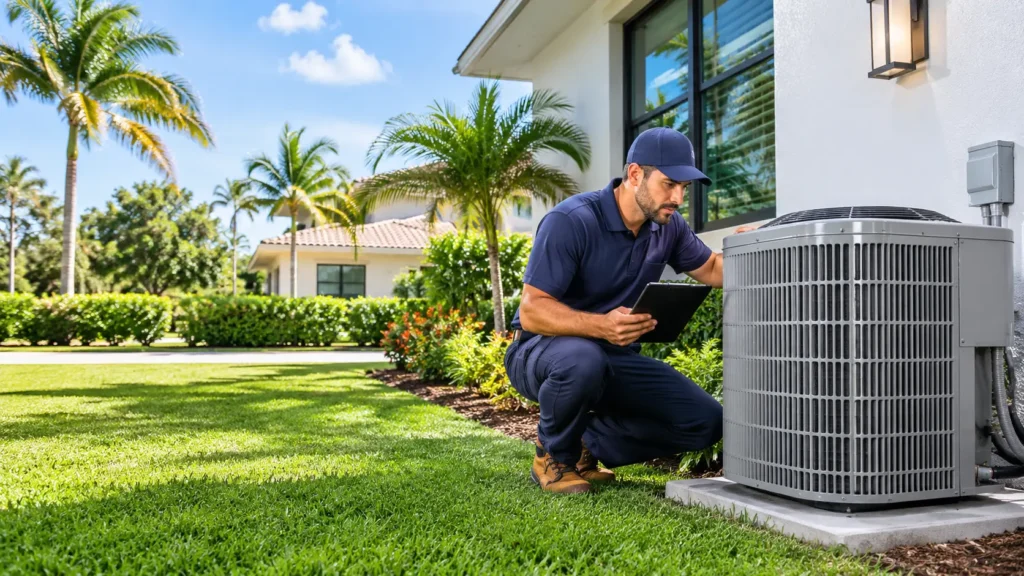
5. Keep Your Outdoor AC Condenser Unit Clean
Your outdoor condenser plays an essential role in your air conditioner’s cooling process. It releases heat collected from inside your home into the outdoor environment.
However, dirt, leaves, grass clippings, and other debris can accumulate around the condenser unit and interfere with proper airflow.
A poorly maintained outdoor unit may have difficulty releasing heat efficiently, potentially affecting overall cooling performance.
Here are a few ways to keep the area around your condenser in good condition:
- Remove leaves, branches, and loose debris around the unit.
- Keep vegetation from obstructing the condenser.
- Maintain the manufacturer’s recommended clearance around the equipment.
- Avoid stacking objects or storing equipment near the unit.
- Arrange professional condenser coil cleaning when necessary.
Be careful when cleaning around your outdoor AC unit. Avoid opening electrical compartments or using high-pressure water on delicate components.
Professional maintenance is recommended when condenser coils need thorough cleaning or the equipment shows signs of reduced performance.
6. Seal Air Leaks Around Windows and Doors
Your air conditioner can work harder than necessary when cool indoor air escapes through gaps and openings around your home.
Air leaks allow warm outdoor air to enter while conditioned air escapes. This creates additional cooling demand, particularly during South Florida’s hottest months.
Common areas where air leaks occur include:
- Window frames and seals.
- Exterior doors.
- Attic openings.
- Electrical outlets on exterior walls.
- Gaps around plumbing and utility penetrations.
Fortunately, many small air leaks can be addressed with weatherstripping, caulking, and appropriate sealing materials.
You should also pay attention to your home’s insulation. Proper insulation helps slow heat transfer between indoor and outdoor spaces, allowing your cooling system to maintain more consistent temperatures.
If your home has older windows or noticeable drafts, improving window seals or considering energy-efficient window upgrades may also help reduce cooling demand.
7. Inspect and Seal Your HVAC Ductwork
Your HVAC ductwork carries conditioned air from your air conditioner to different rooms throughout your home. However, leaking, damaged, or poorly insulated ducts can waste a considerable amount of that conditioned air.
For example, if your ductwork has gaps or disconnected sections, cooled air may escape into an attic, crawl space, or other unconditioned area instead of reaching your living spaces.
Signs of potential ductwork problems include:
- Certain rooms receiving less airflow than others.
- Unusually high electricity bills.
- Dust accumulating around supply vents.
- Weak airflow from some registers.
- Rooms that remain uncomfortable despite thermostat adjustments.
Professional duct inspections can identify air leaks, damaged connections, insulation problems, and airflow restrictions.
Sealing duct leaks and improving duct insulation can help conditioned air reach its intended destinations more effectively.
This is especially important in South Florida, where ductwork located in hot attics may experience significant heat exposure.
8. Reduce Indoor Heat Gain With Curtains and Blinds
Direct sunlight can increase indoor temperatures, forcing your air conditioner to work harder to maintain comfortable conditions.
Windows that receive strong afternoon sunlight can contribute significantly to unwanted indoor heat gain.
Fortunately, simple window treatments can help reduce the amount of heat entering your home.
Consider these options:
- Close blinds and curtains during the hottest parts of the day.
- Install reflective or solar-control window treatments.
- Use blackout curtains in rooms with intense sunlight.
- Consider professionally installed window films where appropriate.
- Plant shade trees or install exterior shading where practical.
Pay particular attention to west-facing windows because they often receive intense afternoon sunlight.
These small improvements can help reduce the cooling demand placed on your air conditioning system.
You don’t need to keep every window covered throughout the day. Instead, focus on windows that receive direct sunlight during peak outdoor temperatures.
9. Control Indoor Humidity for Better AC Performance
Humidity is a major factor affecting indoor comfort in South Florida. Even when your thermostat shows a comfortable temperature, excessive moisture in the air can make your home feel warmer and less comfortable.
Your air conditioner naturally removes some moisture while cooling indoor air. However, the system must be properly sized, maintained, and configured to manage humidity effectively.
Here are some ways to improve indoor humidity control:
- Keep bathroom exhaust fans operating when needed.
- Use kitchen ventilation while cooking.
- Repair plumbing leaks promptly.
- Keep doors and windows closed while the AC is running.
- Make sure condensate drainage remains clear.
- Have your HVAC system inspected if indoor humidity stays unusually high.
A properly functioning air conditioner should help maintain comfortable indoor conditions without excessive moisture buildup.
If your AC cools your home but doesn’t seem to remove enough moisture, there may be an underlying airflow, sizing, drainage, or equipment problem.
Learn more about why your AC may not be removing humidity in South Florida.
10. Schedule Professional AC Maintenance and Consider an Upgrade
Even when you follow good energy-saving habits, your air conditioner still requires regular professional attention.
Over time, components can become dirty, electrical connections may loosen, drainage systems can develop blockages, and other issues can affect cooling performance.
Professional AC maintenance helps identify these problems before they significantly affect your system’s operation.
A typical maintenance visit may include:
- Inspecting and cleaning accessible evaporator and condenser components.
- Checking refrigerant system performance.
- Inspecting electrical connections and components.
- Checking condensate drainage.
- Evaluating airflow and filter condition.
- Inspecting thermostat operation.
- Checking the overall condition of the cooling system.
The U.S. Department of Energy recommends regular maintenance and keeping air conditioning equipment in good working condition to support efficient operation.
You should also consider your AC system’s age and efficiency. Older equipment may consume more electricity than newer, properly sized models designed with modern efficiency technology.
When comparing replacement systems, pay attention to the SEER2 rating. SEER2 measures an air conditioner’s seasonal cooling efficiency under standardized testing conditions. Generally, a higher SEER2 rating indicates greater efficiency.
Variable-speed systems may also offer improved comfort and efficiency under suitable operating conditions.
If your current unit requires frequent repairs or struggles to cool your home, exploring professional AC replacement and installation options may be worthwhile.
The right decision depends on the system’s condition, repair costs, energy consumption, and your household’s cooling requirements.
How Much Can You Save by Improving Your AC’s Energy Efficiency?
The amount you can save depends on several factors, including your air conditioner’s age, current condition, thermostat settings, insulation, ductwork, and electricity rates.
For example, replacing a dirty air filter may help restore proper airflow, while sealing duct leaks can reduce wasted conditioned air. Adjusting thermostat settings may also reduce unnecessary cooling demand.
However, not every home will experience the same savings.
The best approach is to identify which factors are causing your system to consume more energy than necessary. Addressing those problems can help improve cooling performance and make your electricity bills more manageable.
Frequently Asked Questions About Air Conditioner Energy Efficiency
1. How can I make my air conditioner more energy efficient?
You can improve AC energy efficiency by setting your thermostat appropriately, replacing dirty filters, using ceiling fans, cleaning the outdoor condenser area, sealing air leaks, and scheduling professional maintenance. Improving ductwork and insulation can also reduce unnecessary cooling demand.
2. What is the most energy-efficient temperature for an AC?
A thermostat setting of around 78°F when you’re home is a commonly recommended starting point for energy-conscious cooling. You can increase the temperature when you’re away. Your ideal setting may vary depending on personal comfort, indoor humidity, and household needs.
3. Does running an AC at 72°F use more electricity than 78°F?
Generally, yes. Setting your thermostat to 72°F requires your air conditioner to provide more cooling than maintaining 78°F under the same conditions. This can increase energy consumption, particularly during periods of extreme outdoor heat.
4. Do ceiling fans help reduce air conditioning costs?
Yes, ceiling fans can help reduce cooling costs when used strategically. They create airflow that makes people feel cooler, potentially allowing you to raise your thermostat setting. However, turn fans off when rooms are unoccupied because they don’t actually cool empty spaces.
5. How often should I replace my AC air filter?
It depends on your filter type, manufacturer’s recommendations, and household conditions. Some filters need replacement every one to three months, while others have different schedules. Homes with pets, dust, or heavy AC usage may require more frequent filter changes.
6. Can duct leaks increase my electricity bill?
Yes. Leaking ductwork allows conditioned air to escape before it reaches your living spaces. This wastes cooling capacity and can make your air conditioner run longer to maintain the desired temperature. Professional duct inspection and sealing can help address the problem.
7. Is a newer air conditioner more energy efficient?
Many modern air conditioning systems offer better energy efficiency than older models. Higher SEER2 ratings, variable-speed technology, and improved system designs can provide greater efficiency. However, proper sizing and professional installation are essential for achieving the expected performance.
8. Is professional AC maintenance worth it?
Yes. Professional maintenance helps identify issues such as dirty coils, restricted airflow, drainage problems, and electrical component concerns. Addressing these problems can support reliable operation, improve system performance, and help prevent avoidable breakdowns.
Make Your Air Conditioner More Efficient With Central Air Comfort
Improving your air conditioner’s energy efficiency doesn’t always require a major investment. Simple habits like adjusting thermostat settings, replacing dirty filters, using ceiling fans, and reducing indoor heat gain can help your cooling system operate more effectively.
However, some efficiency problems require professional attention. Issues involving refrigerant performance, duct leakage, electrical components, or aging equipment are best evaluated by an experienced HVAC technician.
If your air conditioner isn’t cooling efficiently or your electricity bills continue to increase, Central Air Comfort can help you explore the right solution.
Whether you need routine AC maintenance, system repairs, or an energy-efficient replacement, professional HVAC assistance can help keep your South Florida home comfortable throughout the year.
Contact Central Air Comfort today at (305) 826-1354 to discuss your air conditioning needs and schedule professional HVAC service.