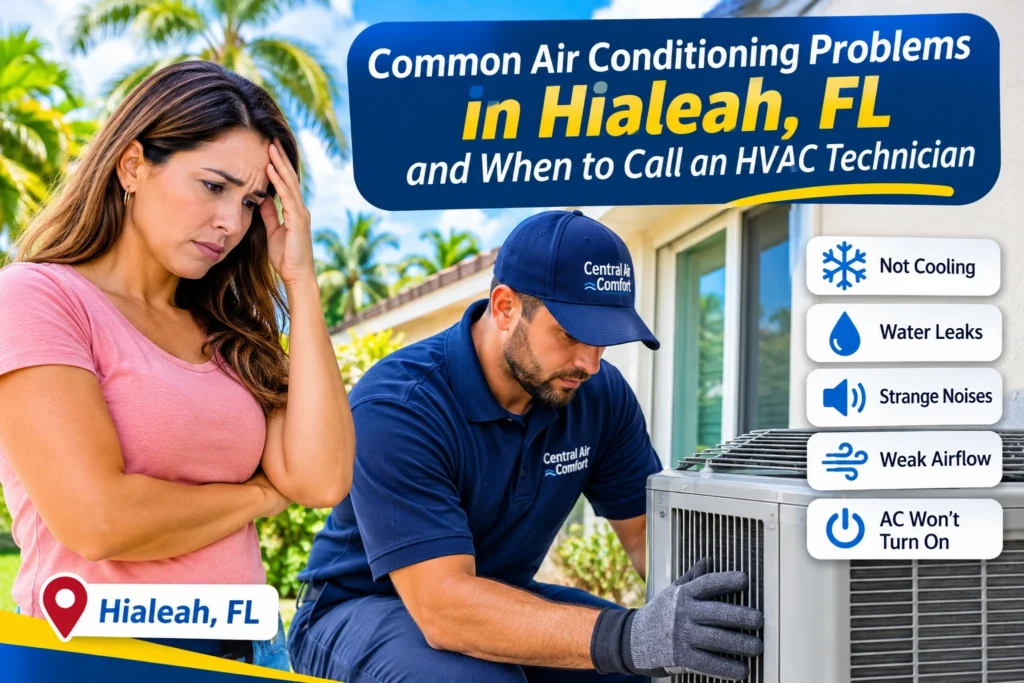
Living in Hialeah, Florida, means relying on your air conditioner for much of the year. With high temperatures, humidity, and long cooling seasons, a properly working air conditioning system is essential for maintaining a comfortable indoor environment. However, continuous AC operation can put additional demands on HVAC equipment, increasing the chances of mechanical problems, electrical failures, and reduced cooling performance.
Many homeowners experience air conditioning problems such as warm air coming from vents, weak airflow, unusual noises, water leaks, frozen coils, and systems that turn on and off repeatedly. While some issues may have simple causes, others require professional diagnosis and repair to prevent further equipment damage.
Understanding the warning signs of a failing air conditioner can help you recognize problems early and make informed decisions about repairs. Whether you have a central air conditioning system, a heat pump, or another type of cooling equipment, knowing when to troubleshoot and when to call an HVAC professional can save time, money, and unnecessary discomfort.
In this guide, we explain common air conditioning problems in Hialeah, their possible causes, basic troubleshooting steps, and when professional AC repair is necessary.
10 Common Air Conditioning Problems Homeowners Experience in Hialeah
Air conditioning systems contain several interconnected components that must work together to provide consistent cooling. When one component develops a problem, it can affect the performance of the entire HVAC system.
Here are ten common AC problems homeowners in Hialeah should understand.
1. Air Conditioner Blowing Warm or Hot Air
An air conditioner that blows warm air instead of cool air is one of the most frustrating problems homeowners experience, especially during hot Florida weather.
Several issues can prevent an AC system from cooling properly, including:
- Incorrect thermostat settings or a faulty thermostat.
- Dirty air filters restricting airflow.
- Low refrigerant levels caused by a refrigerant leak.
- Dirty evaporator or condenser coils.
- Compressor or electrical component problems.
- Issues with the outdoor condenser unit.
Start by checking whether your thermostat is set to cooling mode and whether the temperature setting is appropriate. You should also inspect the air filter and replace it if it is excessively dirty.
If the system continues blowing warm air, the problem may involve the refrigerant circuit, compressor, or another internal component. These issues require professional HVAC diagnostics.
Refrigerant problems should never be treated as a simple recharge issue. An HVAC technician must identify and address the underlying leak before restoring the refrigerant charge.
For a more detailed explanation, read our guide on why an AC runs but does not cool properly.
2. Weak Airflow Coming From AC Vents
Weak airflow is another common HVAC problem that can make certain rooms uncomfortable even when the air conditioner is running.
You may notice that some rooms receive very little cool air while others seem to have normal airflow. This can indicate an issue with the air distribution system or the equipment itself.
Common causes include:
- Dirty or clogged air filters.
- Blocked return air vents.
- Damaged or disconnected air ducts.
- A malfunctioning blower motor.
- Frozen evaporator coils.
- Airflow restrictions within the HVAC system.
Air filters should be inspected regularly because accumulated dust and debris can restrict the movement of air through the system.
However, if replacing the filter does not improve airflow, the problem may be related to the blower assembly or ductwork.
Damaged, leaking, or improperly connected air ducts can allow conditioned air to escape before it reaches the intended rooms. This can reduce cooling performance and make the system work harder.
Professional air duct cleaning, repair, and installation services can help identify duct-related problems and improve air distribution when the ductwork is contributing to the issue.
3. Air Conditioner Turning On and Off Frequently
An air conditioner that repeatedly starts and stops within short periods may be experiencing a problem known as short cycling.
Instead of completing normal cooling cycles, the system shuts down shortly after starting and then turns on again.
This behavior can increase equipment wear, affect indoor comfort, and contribute to unnecessary energy consumption.
Possible causes include:
- Incorrect thermostat placement.
- Restricted airflow from dirty filters.
- An oversized air conditioning system.
- Refrigerant-related problems.
- Electrical control issues.
- Overheating equipment.
An oversized AC system may cool the thermostat area too quickly and shut down before completing an effective cooling cycle. This can also reduce its ability to remove indoor humidity.
Short cycling should not be ignored, particularly when it happens repeatedly throughout the day.
A professional HVAC technician can inspect the thermostat, measure system performance, check airflow, and identify the reason behind frequent cycling.
4. Strange Noises Coming From the Air Conditioner
Air conditioners normally produce some operating noise, but sudden or unusually loud sounds can indicate mechanical or electrical problems.
Different sounds may point toward different issues.
Banging or rattling noises: These may indicate loose panels, unsecured components, or damaged internal parts.
Grinding sounds: Grinding may be associated with worn motor bearings or mechanical problems involving moving components.
Buzzing noises: Electrical connections, contactors, capacitors, or other mechanical components may be responsible.
Hissing sounds: A hissing noise may indicate escaping air or a possible refrigerant leak, depending on where the sound originates.
Repeated clicking: Clicking during startup can be normal, but continuous clicking may indicate a problem with electrical controls or starting components.
Homeowners should avoid opening electrical compartments or attempting to tighten internal components without proper training.
If the noise is loud, persistent, or accompanied by poor cooling, turn off the system when appropriate and arrange a professional AC inspection.
Identifying the source early can help prevent additional damage to the compressor, blower motor, or other HVAC components.
5. Water Leaking Around the Indoor AC Unit
Water around an indoor air conditioning unit is a problem that should be addressed promptly.
Air conditioners naturally produce condensation while removing moisture from indoor air. This water normally collects in a drain pan and flows through a condensate drain line.
When the drainage process becomes restricted, water may overflow and leak around the air handler.
Common causes include:
- Clogged condensate drain lines.
- Damaged or rusted drain pans.
- Improper drainage.
- Frozen evaporator coils that release excess water when they thaw.
- Damaged condensate drainage connections.
In Hialeah, where air conditioners operate frequently and remove substantial moisture from indoor air, proper condensate drainage is particularly important.
Ignoring a water leak can damage nearby flooring, drywall, ceilings, and other building materials.
If you notice active water leakage, turn off the cooling system and arrange an inspection. Avoid opening electrical compartments or attempting repairs around wet equipment.
For more information, see our article on seven common causes of an AC leaking water inside your house.
6. Ice or Frost Forming on AC Coils or Refrigerant Lines
Ice forming on an air conditioner’s evaporator coil or refrigerant lines is not normal, even during extremely hot weather.
Many homeowners assume that frozen components mean the system is producing extra cooling. In reality, ice formation usually indicates that something is preventing the air conditioner from operating correctly.
Possible causes include:
- Restricted airflow caused by a dirty air filter.
- Dirty evaporator coils.
- A malfunctioning blower motor.
- Low refrigerant levels caused by a leak.
- Problems with the system’s airflow or refrigerant operation.
When airflow becomes restricted or refrigerant conditions are abnormal, the evaporator coil can become cold enough for moisture to freeze on its surface.
As ice accumulates, airflow may become even more restricted, making the problem worse.
If you notice ice on your AC system, turn off cooling and arrange professional inspection. Allow the system to thaw naturally. Do not chip away the ice or attempt to handle refrigerant lines.
An HVAC technician can inspect the evaporator coil, blower motor, air filter, and refrigerant circuit to identify the actual cause.
7. Air Conditioner Not Turning On
An air conditioner that refuses to start can make a home uncomfortable very quickly, especially during a hot afternoon in South Florida.
Sometimes the issue involves a simple thermostat setting, while other situations require electrical or mechanical repairs.
Common causes include:
- Incorrect thermostat settings.
- Dead thermostat batteries.
- A tripped circuit breaker.
- Blown electrical fuses.
- Failed capacitors.
- Faulty contactors or control boards.
- Compressor or motor problems.
First, verify that the thermostat is set to cooling mode and has working batteries if applicable.
You can also check the circuit breaker once. If it trips again, leave it off and contact an HVAC professional. Repeatedly resetting a breaker can create additional safety risks.
Electrical components such as capacitors, contactors, and wiring should only be inspected and repaired by qualified technicians.
A professional AC repair technician can test the electrical system, identify the failed component, and recommend the appropriate repair.
8. AC Running Constantly Without Reaching the Set Temperature
An air conditioner that runs for extended periods without maintaining the desired indoor temperature may have a cooling or efficiency problem.
Although longer operating cycles can occur during extremely hot weather, a system that consistently struggles to cool the property deserves attention.
Several conditions may contribute to this problem:
- Dirty air filters or evaporator coils.
- Refrigerant leaks.
- Undersized air conditioning equipment.
- Leaking or poorly insulated ductwork.
- Air escaping through doors and windows.
- Incorrect thermostat readings.
- Problems with the compressor or condenser.
South Florida’s high outdoor temperatures can increase the amount of heat entering a home. Poor insulation, direct sunlight, and air leakage can make the cooling demand even greater.
If the AC runs continuously but the indoor temperature remains uncomfortable, an HVAC technician can evaluate system performance, inspect the ductwork, and determine whether the equipment is operating correctly.
Do not assume that installing a larger air conditioner is automatically the solution. Proper equipment sizing requires a professional load calculation that considers the building’s characteristics and cooling requirements.
9. Unpleasant or Musty Smells Coming From AC Vents
Unpleasant odors coming from air conditioning vents can indicate a moisture, drainage, filtration, or electrical problem.
Different smells may have different causes.
Musty or damp smells: These may be associated with moisture around evaporator coils, standing water in drain pans, or damp insulation.
Dusty smells: Dust accumulation in filters, ducts, or other system components may contribute to unpleasant odors.
Burning smells: Electrical overheating, damaged wiring, or motor problems may produce a burning odor. Turn off the system and seek professional inspection promptly.
Persistent unpleasant odors: These may require an inspection of the drain system, evaporator coil, air handler, and ductwork.
Because air conditioning systems circulate indoor air, addressing the source of unusual odors is important for maintaining a comfortable indoor environment.
If odors continue after replacing the filter, arrange an HVAC inspection rather than relying on air fresheners to mask the problem.
10. Unexpected Increase in Electricity Bills
An unexpected increase in electricity bills can sometimes indicate that an air conditioning system is losing efficiency.
Since cooling systems operate frequently in Hialeah, even a relatively small reduction in performance can affect overall energy consumption.
Common contributing factors include:
- Dirty air filters.
- Dirty evaporator or condenser coils.
- Refrigerant-related problems.
- Restricted airflow.
- Leaking ductwork.
- Aging or inefficient equipment.
- Incorrect thermostat settings.
- Poor insulation and excessive indoor heat gain.
For example, when airflow becomes restricted, an air conditioner may struggle to distribute cool air throughout the home. The system may need to operate longer to maintain the desired temperature.
Likewise, leaking ductwork can allow conditioned air to escape into unconditioned spaces, reducing the amount of cooling that reaches living areas.
A professional HVAC inspection can help identify performance problems and determine whether cleaning, duct repairs, component replacement, or a more extensive repair is necessary.
What Causes Frequent Air Conditioning Problems in Hialeah Homes?
Air conditioning problems can happen anywhere, but the climate and operating conditions in South Florida create specific challenges for residential and commercial HVAC systems.
Understanding these environmental factors helps homeowners recognize why regular inspections and proper system operation are important.
Hot Weather and Long Cooling Seasons
Air conditioners in Hialeah often operate for much of the year because outdoor temperatures remain warm for extended periods.
Long operating hours place additional demands on components such as:
- Compressors.
- Condenser fan motors.
- Blower motors.
- Electrical capacitors.
- Contactors.
- Refrigerant system components.
Over time, continuous operation can contribute to component wear, especially when equipment does not receive proper maintenance.
High Humidity and Moisture Exposure
South Florida’s humidity creates another challenge for air conditioning systems.
An AC system does more than lower indoor temperatures. It also removes moisture from the air as warm indoor air passes across the cold evaporator coil.
This process produces condensation that must drain properly.
If the drain line becomes clogged or the drainage system develops a problem, water can accumulate around the indoor unit.
High moisture exposure can also contribute to corrosion and deterioration of certain HVAC components, depending on the installation environment and equipment condition.
Dust, Dirt, and Restricted Airflow
Dust and airborne particles can accumulate on air filters, coils, and other HVAC components.
When filters become excessively dirty, airflow may decrease, making it harder for the system to move air through the equipment.
Dirty coils can also interfere with heat transfer and reduce cooling performance.
Regular filter replacement and professional HVAC cleaning help maintain proper system operation.
Improper AC Installation or Incorrect System Sizing
Not every recurring air conditioning problem is caused by aging equipment.
Incorrect installation, improper refrigerant charging, poor airflow design, and unsuitable equipment sizing can create performance issues from the beginning.
For example, an oversized air conditioner may cool a room quickly but shut down before removing enough moisture from the indoor air.
An undersized system may struggle to maintain comfortable temperatures during periods of high outdoor heat.
Professional installation and accurate equipment sizing are important for long-term HVAC performance.
What Should You Check Before Calling an HVAC Technician?
Before scheduling an air conditioning repair appointment, homeowners can perform a few basic checks that do not involve opening the equipment or handling electrical components.
These steps may help identify simple issues.
- Check the thermostat: Make sure it is set to cooling mode and the temperature setting is appropriate.
- Inspect the air filter: Replace the filter if it is excessively dirty or clogged. Follow the manufacturer’s recommendations for filter type and replacement frequency.
- Check supply and return vents: Make sure furniture, curtains, or other objects are not blocking airflow.
- Check the circuit breaker once: If the AC has lost power, check whether its breaker has tripped. If it trips again, leave it off and call a technician.
- Look for visible water leaks: Check around the indoor air handler for standing water or signs of drainage problems.
- Observe the outdoor unit: Look for visible obstructions around the condenser. Keep the area clear, but do not touch moving parts or electrical connections.
- Pay attention to unusual sounds: Notice whether the noise happens during startup, normal operation, or shutdown. This information can help the technician diagnose the issue.
What You Should Never Attempt to Repair Yourself
Some AC problems require specialized tools, training, and technical knowledge.
Homeowners should avoid:
- Opening electrical panels or repairing wiring.
- Handling refrigerant or attempting to recharge the system.
- Removing internal mechanical components.
- Chipping ice from frozen evaporator coils.
- Repeatedly resetting circuit breakers.
- Operating equipment that produces smoke, sparks, or burning odors.
If an air conditioning problem involves electrical components, refrigerant, or internal mechanical parts, professional diagnosis is the safer approach.
When Should You Call a Professional HVAC Technician in Hialeah?
Not every air conditioning problem requires immediate professional repair, but certain symptoms should never be ignored.
If basic checks do not resolve the issue, arranging a professional inspection can help prevent further equipment damage.
Consider contacting an HVAC technician when:
- Your AC repeatedly blows warm air.
- Airflow remains weak after replacing the filter.
- The system makes unusual grinding, banging, or buzzing sounds.
- Ice repeatedly develops on the evaporator coil or refrigerant lines.
- Water continues leaking around the indoor unit.
- Your circuit breaker trips repeatedly.
- The air conditioner frequently turns on and off.
- Electricity bills increase alongside poor cooling performance.
- The system stops operating completely.
Situations That Require Immediate Attention
Some air conditioning problems involve potential electrical or property safety risks.
Turn off the equipment when it is safe to do so and seek professional assistance if you notice:
- Burning or electrical odors.
- Smoke or visible sparks.
- Repeated circuit breaker trips.
- Significant water leakage near electrical equipment.
- Suspected refrigerant leakage.
If there is smoke, fire, or an immediate electrical hazard, keep away from the equipment and contact the appropriate emergency service.
Professional HVAC technicians have the training and equipment to inspect electrical systems, identify mechanical failures, and determine the appropriate repair.
How Professional AC Repair Works: What to Expect During an HVAC Service Visit
Many homeowners delay air conditioning repairs because they are unsure what happens during a professional service appointment.
Understanding the repair process can make it easier to identify the right HVAC company and know what to expect.
Step 1: Initial AC System Inspection
The technician begins by discussing the symptoms and inspecting the air conditioning system.
Depending on the reported problem, the inspection may include:
- Thermostat operation.
- Air filters and return vents.
- Indoor air handler.
- Outdoor condenser unit.
- Electrical connections.
- Condensate drain system.
- Evaporator and condenser coils.
A complete inspection helps the technician understand how the equipment is operating rather than focusing on just one symptom.
Step 2: Identifying the Actual Problem
After the initial inspection, the technician performs appropriate diagnostic tests.
These may include electrical testing, airflow measurements, temperature checks, refrigerant system assessments, and drainage inspections.
For example, weak airflow may be caused by a dirty filter, damaged blower motor, or restricted ductwork. Each requires a different solution.
Identifying the underlying cause is important because replacing the wrong component may not resolve the original problem.
Step 3: Repair Recommendations and Cost Estimates
Once the problem has been identified, the technician explains the findings and recommends an appropriate repair.
The cost may depend on:
- The failed component.
- Required replacement parts.
- Labor requirements.
- Equipment type and condition.
- Complexity of the repair.
Homeowners should receive a clear explanation of the recommended work and an estimate before approving repairs.
Step 4: Completing Repairs and Testing System Performance
After approval, the technician performs the required repair.
Depending on the issue, this may involve replacing a failed electrical component, correcting a drainage problem, repairing a mechanical component, or addressing a refrigerant leak.
Once the work is complete, the technician tests the system to confirm proper operation.
This may involve checking airflow, temperature performance, electrical operation, and condensate drainage.
The objective is to address the underlying problem and verify that the air conditioning system is operating as expected.
AC Repair vs. AC Replacement: Which Option Makes More Sense?
When an air conditioner develops a serious problem, homeowners sometimes wonder whether repairing the existing equipment or installing a new system is the better decision.
There is no single answer because the right option depends on the equipment’s age, condition, efficiency, and repair requirements.
When Repairing Your AC Is a Practical Option
AC repair may be a reasonable choice when:
- The system is relatively new.
- The problem involves a replaceable component.
- The equipment has been properly maintained.
- The repair cost is reasonable compared with replacement.
- The system continues to provide adequate cooling.
For example, replacing a failed capacitor or addressing a minor electrical issue may restore normal operation without requiring a complete system replacement.
When Replacing Your Air Conditioner May Be Better
Replacement may deserve consideration when:
- The equipment is approaching the end of its expected service life.
- Major components have failed.
- The system requires frequent repairs.
- Cooling performance has declined significantly.
- Energy efficiency is poor.
- Replacement parts are difficult to obtain.
An older air conditioner that requires repeated expensive repairs may cost more to maintain over time than a newer, properly sized system.
A professional technician can evaluate the existing equipment, explain repair costs, and help compare replacement options.
If a new system is the more practical choice, explore our AC replacement services to learn more about replacing an older air conditioning system.
How Regular HVAC Maintenance Helps Prevent AC Problems
Although some equipment failures happen unexpectedly, regular maintenance can help identify developing problems before they cause major disruptions.
This is especially important in Hialeah, where air conditioners often operate for extended periods throughout the year.
Professional HVAC maintenance generally includes several important inspection and cleaning tasks.
Cleaning or Replacing Air Filters
Air filters collect dust and airborne particles as air circulates through the HVAC system.
Replacing dirty filters helps maintain airflow and reduces unnecessary strain on equipment.
Inspecting Evaporator and Condenser Coils
Coils transfer heat during the cooling process.
Accumulated dirt can interfere with heat transfer, making the air conditioner work harder. Professional inspection helps identify cleaning requirements and other coil-related issues.
Checking Refrigerant System Performance
A technician can assess refrigerant system operation and look for signs of leakage or abnormal performance.
Proper refrigerant levels are essential for effective cooling.
Inspecting Condensate Drain Lines
Drain lines should be checked for restrictions and drainage problems.
This helps reduce the risk of water leaks around the indoor air handler.
Checking Electrical Connections and Components
Loose connections, worn electrical components, and damaged wiring can affect system reliability.
A professional maintenance visit helps identify developing electrical problems.
Inspecting Blower Motors and Airflow
The blower motor moves conditioned air through the duct system.
Checking blower operation and airflow helps identify problems that may affect cooling distribution.
Checking Thermostat Operation
The thermostat controls when the air conditioner starts and stops.
A properly operating thermostat helps maintain comfortable indoor temperatures and appropriate cooling cycles.
For more information about maintenance scheduling, read our guide on how often you should schedule AC maintenance in South Florida.
Why Choose Central Air Comfort for AC Repair in Hialeah, FL?
When an air conditioner stops working properly, choosing an experienced HVAC company can make a significant difference in how quickly and accurately the problem is resolved.
Central Air Comfort provides residential and commercial air conditioning services throughout Hialeah, Hialeah Gardens, and surrounding communities in Miami-Dade and Broward County.
With more than 36 years of industry experience, the company focuses on identifying the actual cause of HVAC problems and recommending practical solutions based on the condition of the equipment.
Homeowners and business owners can benefit from:
- Licensed HVAC technicians.
- AC repair for residential and commercial properties.
- Service for major air conditioning brands and system sizes.
- Professional troubleshooting and system diagnostics.
- Clear repair recommendations and written pricing before work begins.
- Air conditioning installation and replacement options.
- Preventative HVAC maintenance.
- Air duct cleaning, installation, and related services.
- Same-day service availability during operating hours, subject to scheduling.
Whether your air conditioner is blowing warm air, leaking water, making unusual noises, or struggling to maintain comfortable temperatures, professional diagnosis can help determine the right next step.
Central Air Comfort is based at 9901 NW 80th Ave, Bay 3-K, Hialeah Gardens, FL 33016, and serves homeowners and businesses throughout the surrounding South Florida communities.
Schedule Professional Air Conditioning Repair in Hialeah, FL
Air conditioning problems can quickly affect your comfort, indoor environment, and daily routine. While basic checks may help resolve minor issues, persistent cooling problems, unusual noises, electrical failures, and water leaks often require professional attention.
Recognizing the warning signs early can help prevent further damage and make it easier to determine whether your system needs a repair, maintenance visit, or replacement.
If you are experiencing AC problems at your home or business, Central Air Comfort can help identify the issue and explain the available repair options.
Contact Central Air Comfort at (305) 826-1354 to discuss your air conditioning problem and schedule professional HVAC service in Hialeah, FL.
Frequently Asked Questions About Air Conditioning Problems in Hialeah, FL
1. What are the most common air conditioning problems in Hialeah, FL?
Common AC problems in Hialeah include warm air coming from vents, weak airflow, refrigerant leaks, frozen evaporator coils, clogged drain lines, unusual noises, electrical failures, and frequent system cycling. Extended air conditioner use and South Florida’s hot, humid climate can increase equipment demands.
2. Why is my air conditioner running but not cooling my home?
An air conditioner may run without cooling properly because of restricted airflow, dirty coils, refrigerant leaks, thermostat problems, or compressor issues. Check the thermostat and air filter first. If the problem continues, arrange a professional AC inspection.
3. How do I know if my AC needs professional repair?
Warning signs include warm airflow, unusual mechanical noises, water leaks, frozen coils, frequent shutdowns, repeated breaker trips, and rising electricity bills accompanied by poor cooling. Persistent or recurring symptoms should be evaluated by an HVAC technician.
4. Why does my AC keep turning on and off in Hialeah?
Frequent AC cycling can result from thermostat problems, restricted airflow, an oversized cooling system, refrigerant issues, or electrical faults. Short cycling can increase component wear and should be professionally diagnosed if it continues.
5. Can low refrigerant cause an air conditioner to stop cooling?
Yes. Low refrigerant can reduce an air conditioner’s ability to transfer heat, resulting in poor cooling and potentially frozen coils. Refrigerant does not normally get consumed during operation, so low levels may indicate a leak that needs professional diagnosis and repair.
6. Why is my air conditioner leaking water inside my house?
An AC may leak water because of a clogged condensate drain line, damaged drain pan, drainage problem, or melting ice from a frozen evaporator coil. Turn off cooling if water is actively leaking and arrange an inspection to prevent further damage.
7. Is it normal for an air conditioner to run all day in South Florida?
Air conditioners can operate for extended periods during very hot weather, particularly when outdoor temperatures are high. However, a system that runs continuously without maintaining the set temperature may have an airflow, refrigerant, sizing, or equipment problem.
8. How much does AC repair cost in Hialeah, FL?
AC repair costs depend on the faulty component, equipment type, labor, and complexity of the repair. Minor electrical component repairs generally differ significantly from compressor or coil repairs. A professional diagnosis is the best way to obtain an accurate estimate.
9. Should I turn off my AC if it is making unusual noises?
If your AC produces grinding, banging, loud buzzing, or burning odors, turn it off and arrange a professional inspection. Continuing to operate equipment with a potentially damaged mechanical or electrical component can worsen the problem.
10. How often should I schedule professional AC maintenance in Hialeah?
Most residential air conditioning systems benefit from professional maintenance at least once a year. Systems operating heavily in South Florida may benefit from more frequent inspections depending on equipment condition, manufacturer recommendations, and usage.
11. Can dirty air filters cause major air conditioning problems?
Yes. Dirty filters restrict airflow, reduce cooling performance, increase system strain, and may contribute to frozen evaporator coils. Check filters regularly and replace them according to manufacturer recommendations and household conditions.
12. Should I repair or replace an older air conditioner?
The decision depends on equipment age, repair costs, energy efficiency, system condition, and breakdown frequency. A professional HVAC technician can evaluate the equipment and explain whether repairing it or installing a replacement is more practical.
13. Can Central Air Comfort repair residential and commercial air conditioning systems in Hialeah?
Yes. Central Air Comfort provides residential and commercial AC repair services in Hialeah and surrounding South Florida communities. Property owners can contact the company at (305) 826-1354 to discuss their system problems and arrange service.
14. When should I call an emergency HVAC technician?
Contact an HVAC professional promptly if your system has repeated electrical breaker trips, burning odors, smoke, visible sparks, significant water leakage near electrical components, or a complete cooling failure during extreme heat. Turn off the equipment when it is unsafe to operate.