Living in Hialeah, FL, means dealing with hot temperatures and high humidity for much of the year. A dependable air conditioning system is more than a convenience. It helps maintain a comfortable indoor environment, manage humidity, and make your home a pleasant place to spend time. However, choosing the right system involves more than purchasing an air conditioner with a suitable price or brand name.
The right AC system should match your home’s size, layout, insulation, cooling requirements, and energy-efficiency goals. Proper installation is equally important because even high-quality equipment may struggle when it is incorrectly sized or installed.
If you are considering a new air conditioning system, understanding your options can help you make a better long-term decision. This guide explains the different types of AC systems, how to determine the right size, what affects installation costs, and what to expect from professional AC installation in Hialeah, FL.
Why Professional AC Installation Is Important for Hialeah Homes
South Florida’s climate places considerable demands on residential air conditioning systems. Long cooling seasons, high outdoor temperatures, and moisture in the air mean that your equipment must do more than simply lower the indoor temperature.
Professional AC installation helps ensure that your new system is selected and configured according to your property’s actual cooling requirements.
Handling Hialeah’s Heat and High Humidity
In Hialeah, an air conditioner needs to maintain comfortable indoor temperatures while also removing moisture from the air. These two functions work together to create a comfortable indoor environment.
A properly selected system should provide suitable cooling capacity and enough operating time to support effective dehumidification. If the system is oversized, it may cool the rooms quickly and shut off before removing sufficient moisture. This can leave the home feeling cool but damp.
A qualified HVAC professional considers the local climate, home layout, insulation, windows, and other factors before recommending equipment.
Preventing Common AC Installation Mistakes
Incorrect installation can affect an air conditioner’s performance from the beginning. Some common problems include:
- Installing an oversized or undersized air conditioner.
- Incorrect refrigerant charging.
- Poor electrical connections.
- Improper condensate drain installation.
- Leaking or poorly connected ductwork.
- Inadequate airflow through the system.
- Incorrect thermostat placement or configuration.
These problems may contribute to inconsistent cooling, unnecessary energy consumption, frequent service calls, and premature equipment wear.
Improving Long-Term Cooling Performance
A properly installed air conditioning system can provide more consistent temperatures, better airflow, and dependable operation. Correct equipment sizing and installation also help reduce unnecessary strain on important components.
For homeowners planning a new system, professional AC installation services provide a starting point for selecting equipment that matches the property’s cooling requirements.
Different Types of Air Conditioning Systems for Hialeah Homes
Not every home requires the same type of air conditioning system. The best choice depends on your property’s existing HVAC setup, ductwork, room arrangement, and cooling preferences.
Understanding the available systems can help you have a more informed conversation with an HVAC contractor.
Central Air Conditioning Systems
Central air conditioning is a common cooling solution for homes with existing ductwork. It uses an indoor air handler and an outdoor condenser to cool and circulate air throughout the property.
The indoor equipment contains components that help remove heat from the indoor air. The outdoor condenser releases that heat outside, while the duct system distributes cooled air to different rooms.
Advantages of central air conditioning include:
- Consistent cooling throughout the home when the system is properly designed.
- Compatibility with existing residential ductwork.
- Centralized temperature control.
- Options with different energy-efficiency ratings.
- Compatibility with certain indoor air quality upgrades.
Central AC is often a practical choice for homeowners replacing an existing ducted cooling system. However, the condition and design of the ductwork should be evaluated before installing new equipment.
Ductless Mini-Split Air Conditioning Systems
Ductless mini-split systems provide cooling without requiring traditional ductwork. They generally consist of an outdoor unit connected to one or more indoor units installed in individual rooms or zones.
Each indoor unit can provide temperature control for its designated area, depending on the system configuration.
Ductless systems may be suitable for:
- Room additions.
- Converted garages.
- Homes without existing ductwork.
- Individual rooms with different cooling requirements.
- Properties where installing ducts would be difficult.
One important consideration is that each indoor unit must be positioned and sized correctly. The outdoor equipment must also be compatible with the number and capacity of the connected indoor units.
Heat Pump Air Conditioning Systems
Heat pumps provide both cooling and heating using the same general refrigeration process. During cooling operation, they remove heat from the indoor environment and release it outside. During heating operation, a reversing valve changes the direction of the refrigeration cycle so that heat can be transferred indoors.
Because South Florida generally experiences mild winters compared with colder regions, heat pumps can be a practical option for homeowners who want both heating and cooling from one system.
When evaluating a heat pump, consider its cooling and heating efficiency ratings, operating requirements, installation cost, and compatibility with your home.
Which AC System Is Best for Your Property?
There is no single air conditioning system that works best for every Hialeah home.
A central AC system may be appropriate if your property already has suitable ductwork. A ductless mini-split may be more practical for an addition or an area without ducts. A heat pump may be worth considering if you also want an efficient heating option.
A professional evaluation can help determine which equipment fits your property’s layout, comfort requirements, and budget.
How to Choose the Right AC Size for Your Home
Choosing the correct air conditioner size is one of the most important parts of a successful installation. An AC unit that is too large or too small may struggle to provide the comfort and efficiency you expect.
Understanding BTUs and Cooling Capacity
BTU stands for British Thermal Unit. In air conditioning, BTUs are used to describe the amount of heat an air conditioner can remove from an indoor space over a specific period.
Air conditioning capacity is also commonly expressed in tons. One ton of cooling capacity equals 12,000 BTUs per hour.
Although larger homes generally require more cooling capacity, square footage alone cannot determine the correct system size.
Why Square Footage Is Not Enough
Two homes with similar floor areas may have very different cooling requirements.
For example, a home with large windows facing direct sunlight may gain more heat than a property with shaded windows and better insulation.
HVAC professionals consider several factors when evaluating cooling requirements:
- Total living area and ceiling height.
- Number, size, and placement of windows.
- Insulation quality.
- Roof and attic conditions.
- Direct sunlight and property orientation.
- Number of occupants.
- Air leakage and ventilation.
- Existing ductwork and airflow.
- Local outdoor temperatures and humidity.
Considering these factors helps prevent equipment selection based on inaccurate assumptions.
What Is a Manual J Load Calculation?
A Manual J load calculation is a recognized method used to estimate a home’s heating and cooling requirements.
Instead of relying only on square footage or the size of an existing AC unit, the calculation evaluates the property’s construction, insulation, windows, orientation, occupancy, and other conditions.
This helps an HVAC contractor recommend equipment with an appropriate cooling capacity.
Central Air Comfort evaluates a property’s cooling requirements as part of its installation consultation, helping homeowners make informed equipment decisions.
Problems Caused by Incorrect AC Sizing
Problems with an oversized air conditioner
An oversized system may reach the thermostat’s target temperature quickly and shut off before completing a sufficiently long cooling cycle.
Possible consequences include:
- Frequent starting and stopping, known as short cycling.
- Reduced moisture removal.
- Uneven indoor comfort.
- Additional wear from frequent cycling.
- Potentially higher operating costs.
Problems with an undersized air conditioner
An undersized system may struggle to maintain the desired temperature during periods of high outdoor heat.
Homeowners may experience:
- Longer operating cycles.
- Difficulty cooling certain rooms.
- Reduced comfort during hot afternoons.
- Greater operating demands.
- Inability to meet the property’s peak cooling requirements.
The goal is not to install the biggest available unit. It is to select an air conditioner that matches the home’s calculated cooling load.
Understanding SEER2 Ratings and Energy-Efficient AC Systems
Energy efficiency is another important consideration when choosing a new air conditioner. Since residential cooling systems can operate for extended periods in South Florida, selecting appropriate equipment can influence long-term electricity consumption.
What Is a SEER2 Rating?
SEER2 stands for Seasonal Energy Efficiency Ratio 2. It measures the seasonal cooling efficiency of an air conditioning system under updated testing conditions.
In general, a higher SEER2 rating indicates greater cooling efficiency under the applicable test conditions.
However, an efficiency rating should not be the only factor when comparing air conditioners. Equipment sizing, installation quality, maintenance, and household usage also influence actual performance.
Single-Stage, Two-Stage, and Variable-Speed Systems
Air conditioners use different operating technologies to control cooling output.
Single-stage systems
These systems operate at one primary cooling capacity. They switch on when cooling is needed and turn off when the thermostat reaches its target temperature.
They are generally simpler in operation and may have a lower initial equipment cost.
Two-stage systems
Two-stage systems can operate at a lower or higher cooling capacity, depending on the cooling demand.
The lower stage can provide more gradual cooling during periods of moderate demand, while the higher stage supplies additional capacity when needed.
Variable-speed systems
Variable-speed technology allows certain system components to adjust their operating speed across a range of conditions.
This can support more consistent temperature control, longer operating cycles, and improved humidity management when the equipment is properly selected and installed.
Is a More Efficient AC System Worth the Investment?
A higher-efficiency air conditioner may have a higher purchase price, but it can be worth considering if your household uses air conditioning frequently.
When comparing equipment, evaluate:
- Initial purchase and installation costs.
- SEER2 efficiency ratings.
- Expected cooling requirements.
- Available equipment features.
- Manufacturer warranty coverage.
- Expected operating expenses.
- Long-term ownership considerations.
Ask your HVAC contractor to explain the differences between equipment options so you can compare their features and costs rather than choosing based on the efficiency rating alone.
What Factors Affect AC Installation Costs in Hialeah, FL?
The cost of installing a new air conditioning system depends on several factors. Two homes in the same neighborhood can receive different installation estimates because their layouts, equipment requirements, and existing HVAC conditions may not be the same.
Type and Size of Air Conditioning System
Central air conditioners, ductless mini-splits, and heat pumps have different equipment and installation requirements.
Cooling capacity also affects equipment selection and pricing. A larger system may require different components and installation considerations than a smaller residential unit.
Existing Ductwork and Electrical Requirements
If your home already has ductwork, the contractor should inspect it before connecting new equipment.
Damaged ducts, leaking connections, poor insulation, and airflow restrictions may need attention.
Other potential installation requirements include electrical modifications, refrigerant line work, thermostat compatibility, and condensate drainage.
Energy Efficiency and Equipment Features
Air conditioners with higher efficiency ratings or advanced operating features may cost more initially.
Variable-speed technology, upgraded controls, and other equipment features can influence the total project price.
Labor, Permits, and Installation Complexity
The condition of the existing system, equipment accessibility, removal requirements, and project scope can affect labor costs.
Applicable building permits and inspections should also be considered. Requirements depend on the installation and local regulations.
Why a Personalized Installation Estimate Matters
Online price ranges cannot account for every home’s installation requirements.
A professional estimate should explain the recommended equipment, installation work, required modifications, and associated costs.
Central Air Comfort provides written installation quotes after evaluating the property and its cooling requirements. The company also offers financing options for homeowners who want to discuss payment flexibility.
For an older or unreliable system, you may also want to explore AC replacement services and compare the benefits of replacing the equipment with the cost of continued repairs.
What to Expect During a Professional AC Installation Process
Understanding the installation process can help you prepare for the work and know what should happen before your new air conditioner is ready to operate.
Step 1: Home Evaluation and Cooling Requirements
The process begins with an inspection of the property and existing HVAC equipment.
The technician evaluates the home’s layout, insulation, windows, ductwork, electrical requirements, and cooling needs. A suitable load calculation helps establish the required system capacity.
Step 2: Selecting the Right Equipment
After evaluating the property, the HVAC contractor can recommend suitable air conditioning equipment.
The discussion should cover system type, cooling capacity, efficiency ratings, available features, and installation costs.
Homeowners should have an opportunity to understand the options before making a decision.
Step 3: Preparing the Installation Area
Before installing the new equipment, the technician prepares the indoor and outdoor installation areas.
This may involve checking the equipment platform, electrical connections, refrigerant lines, drainage, and ductwork.
If the existing equipment is being replaced, the old system must be disconnected and removed safely.
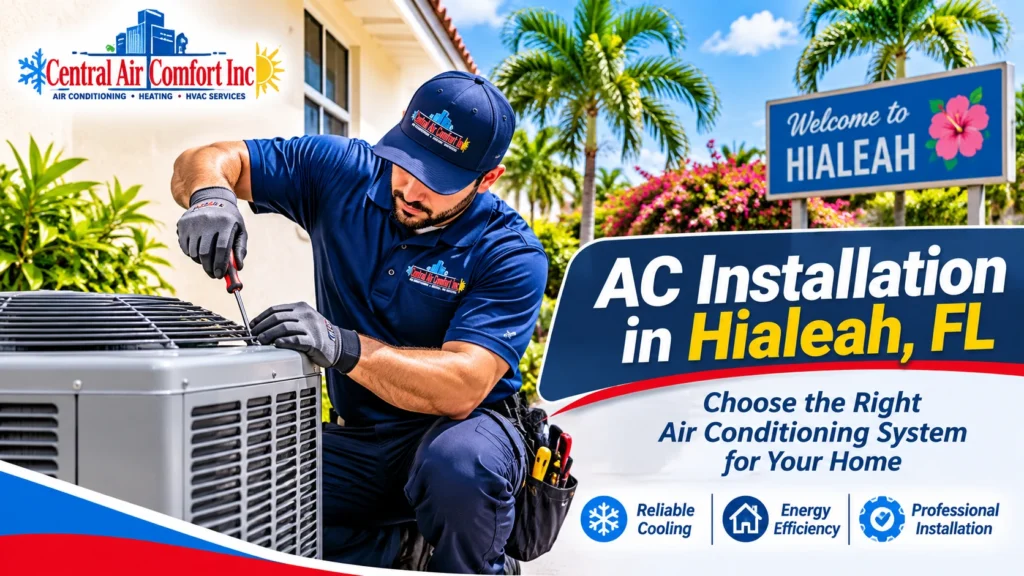
Step 4: Installing the New AC System
The installation team positions the indoor and outdoor equipment and completes the necessary connections.
Depending on the system, this may include:
- Installing the air handler and outdoor condenser.
- Connecting refrigerant lines.
- Completing electrical connections.
- Connecting the condensate drain.
- Checking ductwork connections.
- Configuring the thermostat.
All work should follow manufacturer instructions and applicable installation requirements.
Step 5: System Testing and Commissioning
Installing the equipment is only part of the job. The system must also be checked to confirm that it operates correctly.
Testing may include:
- Checking refrigerant charge using the appropriate procedures.
- Measuring airflow.
- Verifying electrical operation.
- Inspecting condensate drainage.
- Testing thermostat communication.
- Checking system temperatures and cooling performance.
Proper commissioning helps identify installation problems before the equipment is placed into regular use.
Step 6: Homeowner Guidance
Before completing the job, the installation team should explain how to operate the new system.
Homeowners should understand the thermostat settings, air filter requirements, basic operating instructions, and recommended maintenance schedule.
Keep equipment documentation and warranty information in an accessible place for future reference.
How to Prepare Your Home Before a New AC Installation
A little preparation can help make installation day easier for everyone.
Before the technicians arrive:
- Clear the area around the existing indoor air handler and outdoor condenser.
- Move furniture or personal belongings away from installation access points.
- Keep walkways and equipment access areas clear.
- Secure pets in a comfortable location.
- Discuss any previous cooling or airflow problems with the technician.
- Make sure someone can provide access to the property.
- Ask about the expected installation duration and any temporary interruption to cooling.
If the installation requires additional ductwork or electrical modifications, confirm the project details and expected schedule beforehand.
Why Choose a Local HVAC Professional for AC Installation in Hialeah?
Choosing an HVAC contractor is an important part of purchasing a new air conditioning system. The equipment matters, but the quality of installation also has a direct effect on how well the system performs.
Familiarity With South Florida Climate Conditions
A contractor experienced in South Florida understands the cooling demands created by high temperatures and humidity.
This knowledge helps when evaluating system capacity, humidity management, ductwork, and equipment efficiency.
Professional Installation and Equipment Knowledge
A qualified HVAC contractor should evaluate your property, explain equipment options, and follow the manufacturer’s installation requirements.
Look for a contractor who provides clear recommendations, explains the installation process, and addresses your questions before work begins.
Continued HVAC Support After Installation
Your relationship with an HVAC company should not end when the new air conditioner starts operating.
Routine inspections and appropriate servicing help keep equipment in good working condition. If a problem develops, having access to professional repair services can also help restore comfort.
Central Air Comfort Inc provides residential and commercial HVAC services throughout Hialeah, Hialeah Gardens, and surrounding areas in Miami-Dade and Broward counties.
The company’s services include air conditioning installation, system replacement, AC repair, preventative maintenance, and air duct services.
Homeowners can also explore HVAC services in Hialeah to learn more about available local heating and cooling solutions.
Frequently Asked Questions About AC Installation in Hialeah, FL
How much does AC installation cost in Hialeah, FL?
AC installation costs depend on the equipment type, cooling capacity, efficiency rating, ductwork condition, electrical requirements, and installation complexity. A professional inspection is the best way to receive an accurate estimate based on your home’s specific requirements.
What size air conditioner do I need for my Hialeah home?
The correct AC size depends on your home’s square footage, insulation, ceiling height, windows, sunlight exposure, occupancy, and other factors. An HVAC professional can perform a Manual J load calculation to determine the appropriate cooling capacity.
How long does it take to install a new AC system?
A straightforward residential AC replacement can often be completed in one day. However, installations involving ductwork modifications, electrical upgrades, or more complex equipment may take longer. Your contractor should provide an expected timeline before starting the project.
Which type of air conditioner is best for homes in Hialeah, FL?
Central air conditioning is a common choice for homes with existing ductwork. Ductless mini-splits can work well for individual rooms or properties without ducts, while heat pumps provide both heating and cooling. The right option depends on your property’s layout and cooling requirements.
What is the difference between SEER and SEER2 ratings?
SEER2 is an updated seasonal efficiency rating that uses revised testing procedures compared with the older SEER standard. It helps homeowners compare the cooling efficiency of different air conditioning systems under standardized test conditions.
Is it better to repair an old AC or install a new one?
The decision depends on the system’s age, repair history, current condition, efficiency, and expected future repair costs. If your air conditioner needs frequent repairs or no longer provides dependable cooling, replacement may be worth considering. A professional diagnosis can help you compare both options.
Do I need new ductwork when installing a new AC system?
Not necessarily. Existing ductwork may be suitable for a new system if it is properly sized, sealed, insulated, and in good condition. A professional inspection can identify leaks, damaged sections, airflow restrictions, and compatibility issues before installation.
How often should a newly installed AC system be maintained?
A newly installed air conditioner should receive regular professional maintenance according to the manufacturer’s recommendations. Annual service is a useful minimum planning point, although heavily used systems may benefit from more frequent attention. Homeowners should also check and replace air filters as recommended.
Can a new AC system help control humidity in my Hialeah home?
Yes. A properly sized and installed air conditioner can help remove moisture from indoor air during cooling operation. However, humidity control also depends on system runtime, airflow, ductwork, drainage, insulation, and other sources of moisture inside the property.
Do I need a permit for AC installation in Hialeah, Florida?
Depending on the scope of the installation or replacement, permits and inspections may be required under applicable local building regulations. Your HVAC contractor should explain which requirements apply to your project and coordinate the necessary permitting.
Schedule Professional AC Installation in Hialeah, FL With Central Air Comfort
Choosing the right air conditioner is an investment in your home’s comfort and long-term cooling performance. The best results start with understanding your property’s cooling requirements, comparing suitable equipment, and making sure the installation is completed correctly.
Whether you are replacing an aging air conditioner or installing a cooling system in a home that needs new equipment, professional guidance can help you make an informed decision.
Central Air Comfort Inc provides residential AC installation and replacement services throughout Hialeah, Hialeah Gardens, and surrounding South Florida communities. The team evaluates your property’s cooling needs, explains available equipment options, and provides written installation quotes.
Ready to install a new air conditioning system?
Contact Central Air Comfort at (305) 826-1354 to discuss your home’s cooling requirements and request an AC installation estimate.
Website: https://centralaircomfort.com/
Address: 9901 NW 80th Ave Bay 3-K, Hialeah Gardens, FL 33016.